

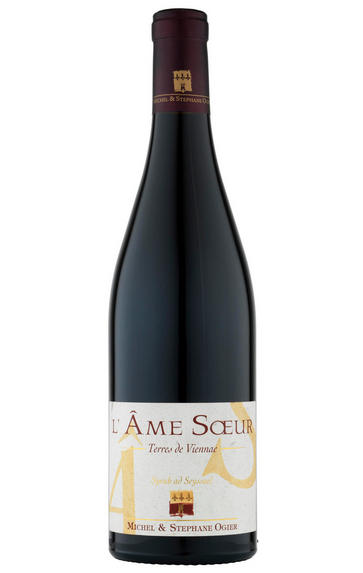
2011 Collines Rhodaniennes, L'Ame Soeur, Syrah de Seyssuel, Stéphane Ogier, Rhône
Critics reviews
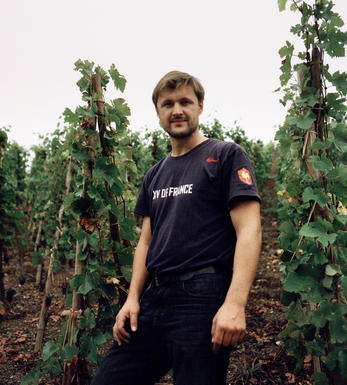
Stephane Ogier, tall and blond with rugged, Brad Pitt-like good looks, is the next generation of young, ambitious, well-traveled children from family-owned estates. Learning his trade and working next to his father, who is now fully retired, Stephane Ogier has moved confidently and dramatically to expand this estate from the Cote Rotie holdings to their vineyards that go into La Rosine and those from Seyssuel that go into l’Ame Soeur. He has also added a St-Joseph cuvee from a small parcel of vines in Malleval, next to his Condrieu holdings. Moreover, readers should not forget the recent white wine offerings from Ogier. The great success for the 2011s is attributable, as Ogier says, to harvesting seven days later than just about everyone else in Cote Rotie, in addition to aggressive green harvesting and farming practices in the vineyards. This is evident across the board as these are some of the finest 2011s I tasted in the Northern Rhone. Ogier has 12 separate Cote Rotie parcels spread along the hillsides of the Cote Blonde and Cote Brune. The 2011s were harvested between September 16 and October 8, and because of Ogier’s conservative farmi
Stephane Ogier, tall and blond with rugged, Brad Pitt-like good looks, is the next generation of young, ambitious, well-traveled children from family-owned estates. Learning his trade and working next to his father, who is now fully retired, Stephane Ogier has moved confidently and dramatically to expand this estate from the Cote Rotie holdings to their vineyards that go into La Rosine and those from Seyssuel that go into l’Ame Soeur. He has also added a St-Joseph cuvee from a small parcel of vines in Malleval, next to his Condrieu holdings. Moreover, readers should not forget the recent white wine offerings from Ogier. The great success for the 2011s is attributable, as Ogier says, to harvesting seven days later than just about everyone else in Cote Rotie, in addition to aggressive green harvesting and farming practices in the vineyards. This is evident across the board as these are some of the finest 2011s I tasted in the Northern Rhone. Ogier has 12 separate Cote Rotie parcels spread along the hillsides of the Cote Blonde and Cote Brune. The 2011s were harvested between September 16 and October 8, and because of Ogier’s conservative farming practices as well as the courage it took to wait to harvest until after the rains, the quality of the fruit is outstanding.
Robert Parker, Wine Advocate #204, Dec 2012
About this WINE
Domaine Stephane Ogier
The Ogier family had been established growers in Ampuis for over seven generations, but it was only in the 1980s that they began vinifying their own grapes. Stéphane joined the family estate in ’97, working alongside his father Michel, before taking over in 2003.
Heralded as the face of the Northern Rhône’s new generation, Stéphane continues acquiring new parcels and trying new techniques. He brings a Burgundian approach to the region’s terroir from his studies in Beaune. He works with multiple lieux-dits, vinifying each separately and using oak sparingly. This allows the characteristics of each to show. He releases many wines as single lieu-dit bottlings later in the year and others he blends, selecting from different barrels to build a style representative of both his vision and the vintage. Stéphane’s latest investment includes vineyards in Rasteau, Cairanne, and Plan de Dieu in the Southern Rhône, bringing his total land-ownings there up to 50 hectares, all destined for his Côtes-du-Rhône offering.
Vin de Pays des Collines Rhodaniennes
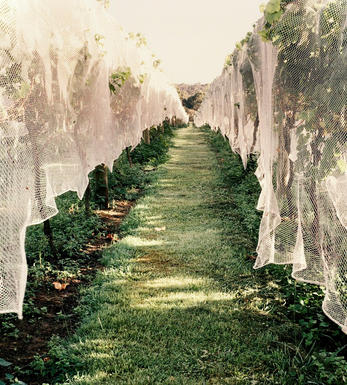
Vin de Pays des Collines Rhodaniennes is a sub-division of the broader regional appellation of Vin de Pays des Comtés Rhodaniens and encompasses wines produced in the Rhone valley.
Yves Cuilleron and Domaine Vins de Vienne (the Yves Cuilleron - Pierre Gaillard & François Villard joint venture) are the star performers in this Vin de Pays appellation, offering red and white wines from Syrah and Viogner. The wines are distinctly modern-styled yet filled with terroir character and show depth of fruit and powerful structure.
Syrah/Shiraz
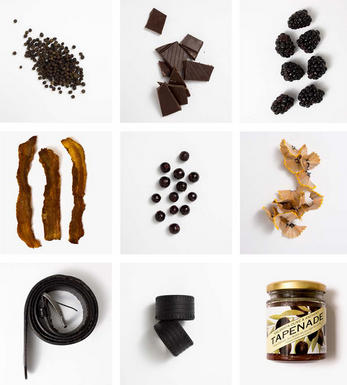
A noble black grape variety grown particularly in the Northern Rhône where it produces the great red wines of Hermitage, Cote Rôtie and Cornas, and in Australia where it produces wines of startling depth and intensity. Reasonably low yields are a crucial factor for quality as is picking at optimum ripeness. Its heartland, Hermitage and Côte Rôtie, consists of 270 hectares of steeply terraced vineyards producing wines that brim with pepper, spices, tar and black treacle when young. After 5-10 years they become smooth and velvety with pronounced fruit characteristics of damsons, raspberries, blackcurrants and loganberries.
It is now grown extensively in the Southern Rhône where it is blended with Grenache and Mourvèdre to produce the great red wines of Châteauneuf du Pape and Gigondas amongst others. Its spiritual home in Australia is the Barossa Valley, where there are plantings dating as far back as 1860. Australian Shiraz tends to be sweeter than its Northern Rhône counterpart and the best examples are redolent of new leather, dark chocolate, liquorice, and prunes and display a blackcurrant lusciousness.
South African producers such as Eben Sadie are now producing world- class Shiraz wines that represent astonishing value for money.
Buying options
Add to wishlist
Description
The 2011 L’Âme Soeur is as good as ever. Produced from vines grown on micro-schist in Seyssuel north of Côte-Rôtie on the left bank of the Rhône, this has become a serious cuvée despite its relatively young 13-year-old vines. Seyssuel is an area were the first Roman vineyards were built and it lay barren after the destruction of the vineyards by phylloxera at the end of the 19th century. The vineyards are steep (up to 50 gradient like Côte-Rôtie itself) and were first replanted in 1996. 14 growers are now located in Seyssuel and in 2012 they all applied to receive AOP status. L’Âme Soeur is rich and spicy on the nose, with good mouthfeel and flavours of rich warm exotic fruit on the palate. As the vines grow older, this cuvée is becoming more and more exciting.
Fine Wine Team
We know all about Stéphane’s reputation in Côte-Rôtie. He is also burdened with the mantle of being the leading producer in the ancient Seyssuel vineyards above Vienne. Micro-schist gives this an extraordinary wine a Côte Blonde elegance, with violets, dense, dark fruit and very finely etched tannins causing one to consider withdrawing the statement made at the end of the La Rosine note above. This too is currently a Vin de Pays, but it is sure to be promoted to full appellation status soon.
Simon Field MW, BBR Buyer
Stéphane Ogier is now, arguably, the leading producer in Côte-Rôtie. Confident, modest and courteous, in short he is the perfect ambassador for the appellation. Stéphane now farms 12 parcels in Côte-Rôtie and has also launched a well-named Côtes du Rhône (Le Temps est Venu which we will sell elsewhere). He held his nerve through the rainy patches in September and the relatively late-picking has been rewarded with a superb range of wines. Stéphane compares their style, with mo
wine at a glance
Delivery and quality guarantee