
Domaine Damoy
Domaine Pierre Damoy in Burgundy is one of the prize domaines of Gevrey Chambertin and no longer one of the underachievers – some others with hearty helpings of grand cru vineyards still are. This Domaine made some beautiful wines in the 50s and early 60s, after which there followed a significant dip until the current Pierre Damoy took over in the early 1990s.
While Pierre sells some grapes from Chambertin Clos de Bèze, since he has such a large holding, and even a few from Chapelle-Chambertin, he purchases grapes from the lower appellations where he is short of supply himself: Bourgogne Rouge, Marsannay Longeroies and Gevrey-Chambertin La Justice.
Pierre does not like the idea of ‘bio’, nor of lutte raisonée. He describes his methods in the vineyards as durable viticulture which is neutral for the soil – whereas the organic farmers are too reliant on copper for his taste. His plots are ploughed twice a year and then the natural grasses which grow between times are mown.
He likes to pick relatively late so as to make sure the grapes are fully ripe, though there are signs that he may pull back from the recently fashionable ultra-late picking camp. The grapes are selected in the vines and again in the cellar, destemmed using very sensitive equipment, then given a long cool pre-maceration before the fermentation gets under way, during which there is minimal manipulation.
There is a relatively high percentage of new wood in the barrel cellar, 30% for the Bourgogne, 50% for Gevrey Chambertin, rising to 70-80% for the crus and 100% for the vieilles vignes cuvée. Most of the barrels come from François Frères with some from Berthomieu and Ermitage. Interestingly, Pierre feels that medium fine grained wood from such forests as Bertranges suits his wines better than the fine grained Tronçais.
Chambertin Clos de Bèze Grand Cru 5.36
Chapelle Chambertin Grand Cru 2.22
Chambertin Grand Cru 0.48
Gevrey Chambertin Clos Tamisot monopole 1.45
Gevrey Chambertin 0.34
Gevrey Chambertin Clos Tamisot monopole
This is more or less Pierre Damoy’s back garden, much in the same was as Clos de la Barre is chez Lafon in Meursault. In both cases the proximity of the houses kicks off the vegetative cycle early, though ripening takes a long time. Most of the vines date back to 1922. Pierre Damoy describes the wine as being exceptionally fruity, with the structure of a grand cru.
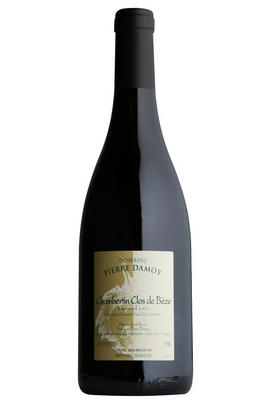
Chambertin Clos de Bèze
Damoy is easily the largest holder of this grand cru, though he sells grapes to several other producers as five hectares worth is a lot to bring to market. Pierre loves the fat and grace of this wine which benefits from a high proportion of vines dating back to 1920, along with some of those planted in 1985. There is a deep heart to this wine along with some spicy and peppery top notes.
Chambertin Clos de Bèze vieilles vignes
This designation has evolved over the years: In 1993 and 1999 Pierre Damoy made a separate cuvée from his old vines. Also in 1998 but in tiny volume that has never been put on the market. In 2001 there was only one cuvée made, just from the old vines, and those who shipped early will have it with vieilles vignes on the label, but it is not a separate bottling. In 2002, 2003 and 2005 there is a vieilles vignes bottling from the plot of 1920 vines but this has been refined since into a specific location within the plot since 2006.
While Pierre sells some grapes from Chambertin Clos de Bèze, since he has such a large holding, and even a few from Chapelle-Chambertin, he purchases grapes from the lower appellations where he is short of supply himself: Bourgogne Rouge, Marsannay Longeroies and Gevrey-Chambertin La Justice.
Pierre does not like the idea of ‘bio’, nor of lutte raisonée. He describes his methods in the vineyards as durable viticulture which is neutral for the soil – whereas the organic farmers are too reliant on copper for his taste. His plots are ploughed twice a year and then the natural grasses which grow between times are mown.
He likes to pick relatively late so as to make sure the grapes are fully ripe, though there are signs that he may pull back from the recently fashionable ultra-late picking camp. The grapes are selected in the vines and again in the cellar, destemmed using very sensitive equipment, then given a long cool pre-maceration before the fermentation gets under way, during which there is minimal manipulation.
There is a relatively high percentage of new wood in the barrel cellar, 30% for the Bourgogne, 50% for Gevrey Chambertin, rising to 70-80% for the crus and 100% for the vieilles vignes cuvée. Most of the barrels come from François Frères with some from Berthomieu and Ermitage. Interestingly, Pierre feels that medium fine grained wood from such forests as Bertranges suits his wines better than the fine grained Tronçais.
Chambertin Clos de Bèze Grand Cru 5.36
Chapelle Chambertin Grand Cru 2.22
Chambertin Grand Cru 0.48
Gevrey Chambertin Clos Tamisot monopole 1.45
Gevrey Chambertin 0.34
Gevrey Chambertin Clos Tamisot monopole
This is more or less Pierre Damoy’s back garden, much in the same was as Clos de la Barre is chez Lafon in Meursault. In both cases the proximity of the houses kicks off the vegetative cycle early, though ripening takes a long time. Most of the vines date back to 1922. Pierre Damoy describes the wine as being exceptionally fruity, with the structure of a grand cru.
Chambertin Clos de Bèze
Damoy is easily the largest holder of this grand cru, though he sells grapes to several other producers as five hectares worth is a lot to bring to market. Pierre loves the fat and grace of this wine which benefits from a high proportion of vines dating back to 1920, along with some of those planted in 1985. There is a deep heart to this wine along with some spicy and peppery top notes.
Chambertin Clos de Bèze vieilles vignes
This designation has evolved over the years: In 1993 and 1999 Pierre Damoy made a separate cuvée from his old vines. Also in 1998 but in tiny volume that has never been put on the market. In 2001 there was only one cuvée made, just from the old vines, and those who shipped early will have it with vieilles vignes on the label, but it is not a separate bottling. In 2002, 2003 and 2005 there is a vieilles vignes bottling from the plot of 1920 vines but this has been refined since into a specific location within the plot since 2006.
UK
- change site