

A guide to Champagne
Written by

What is Champagne?
Champagne is a sparkling wine from the Champagne region in north-east France. The wine must also be made in the region and adhere to a number of strict regulations which govern how it’s produced.
What makes Champagne different from sparkling wine?
All Champagne is sparkling wine, but not all sparkling wine is Champagne. Champagne must be produced in the Champagne region of France and in accordance with the region’s strict regulations on grape varieties, production method and ageing requirements. Sparkling wine is a broader term covering Champagne, English sparkling wine, Crémant (from France), Prosecco (from Italy), Cava (from Spain) and even Lambrusco, a sparkling red wine from northern Italy – to name but a few.
How is Champagne made?
Champagne is made using the traditional method – sometimes known as méthode traditionelle or méthode Champenoise. This is where a second fermentation occurs inside the bottle, after the initial alcoholic fermentation. It is this second fermentation which produces the bubbles, the trapped carbon dioxide produced as a biproduct.
What is the second fermentation?
Which grapes are used to make Champagne?
The predominant grape varieties used in Champagne are Chardonnay, Pinot Noir and Meunier. Other permitted varieties include Pinot Blanc, Pinot Gris and Arbane.
What do Brut, Extra Brut and Demi-Sec mean?
These are the most common indicators of sweetness in Champagne, which tell you how much sugar has been added to it before bottling. Sugar is sometimes added to Champagne to balance acidity or create a consistent house style.
What is a Brut Champagne?
Brut Champagne is very dry and not sweet, with 0-12 grams per litre (g/L) of sugar.
What is an Extra Brut Champagne?
Extra Brut Champagne has only 0-6g/L.
What is a Demi-Sec Champagne?
Demi-Sec (meaning “half dry”) Champagne has 32-50 g/L so will have a noticeable sweetness with ripe apple and honey notes.
What is vintage Champagne?
Vintage Champagne is made with grapes which were harvested in one year. The year will be printed on the label and is known as “the vintage”. Vintage Champagne is, often, only made in very good years which had good weather, optimum ripening in the grapes and a healthy harvest. As such, vintage Champagne commands higher prices than non-vintage Champagne.
What is non-vintage Champagne?
Non-vintage Champagne is a blend of wines produced from grapes harvested over a few different years. This allows producers to blend wines and maintain a consistent house style over many years. Between 80-90% of Champagne produced is non-vintage.
What is Blanc de Blancs Champagne?
Blanc de Blancs Champagne is a Champagne made only with white grapes. This usually means Chardonnay but Pinot Blanc, Petit Meslier, Pinot Gris and Arbane are also permitted. The term Blanc de Blancs means a white wine which has come from white grapes.
What is Blanc de Noirs Champagne?
Blanc de Noirs Champagne is a Champagne made only with the red grapes, Pinot Noir and/or Meunier. The term Blanc de Noirs means a white wine which has come from black (red) grapes.
What is rosé Champagne?
Rosé Champagne is pink Champagne with subtle red fruit flavours like cherry and strawberry. It can be made by two different methods.
The first is blending. This is when a small amount of still red wine (made from Pinot Noir and/or Meunier) is added to the still white wine before the secondary fermentation. It’s worth nothing that this method is only allowed in Champagne so still rosé wine is never made like this.
The second method of making rosé Champagne is maceration, known as saignée, which means “bleeding”. This is when the Pinot Noir and Meunier grapes are allowed to macerate with their skins before fermentation. It is from the skins that the rosé Champagne then gets its pink hue.
How should Champagne be served?
Because it’s bottled under pressure, Champagne should always be served chilled, between 8-10°C. At warmer temperatures, the liquid can become a bit more excited and the cork can be harder to ease out of the bottle gently.
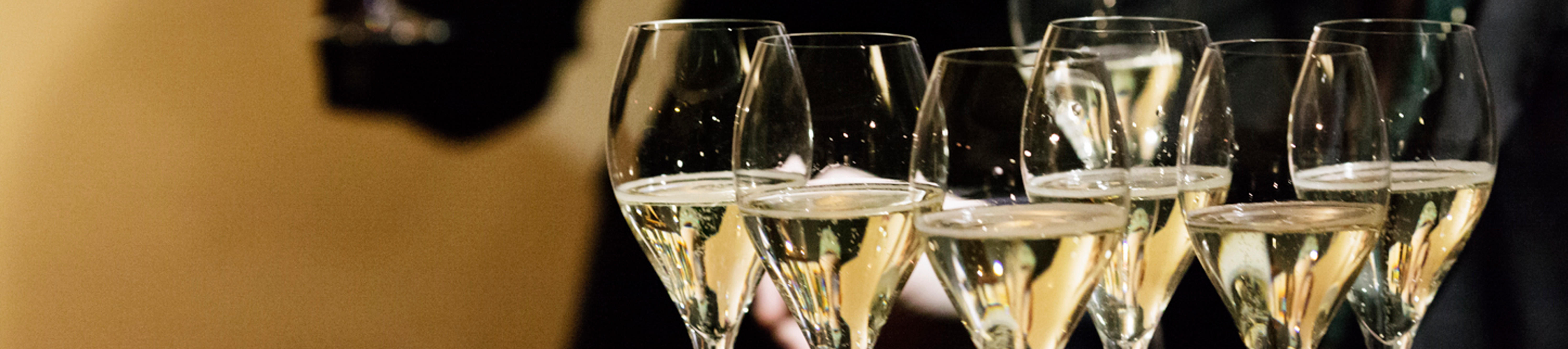
Despite their popularity, the wide-rimmed Champagne coupes make Champagne go flat and dull the flavours very quickly. Tulip shaped glasses are the best for Champagne as they capture the wine’s aromas and preserve its freshness and fizz.
Which foods pair best with Champagne?
Champagne is a very versatile option for food pairing. Its high acidity and zesty citrus notes make it a beautiful pairing for shellfish.
The high acidity also makes it good at cutting through rich foods and sauces. Try it with fish and chips, a creamy risotto or even fried chicken.
Sweeter styles of Champagne, like a Demi-Sec, can even be paired with pudding or fresh fruit.
How should Champagne be stored?
Unopened bottles of Champagne should be stored in a cool, dark place until you’re ready to drink them. Some of the best Champagnes can be kept for years, even decades, before opening. If you’re planning on storing yours for this long, professional storage such as a specialist wine warehouse, is a good idea.
If you’re planning to drink it relatively soon, keeping it in your fridge at home is perfect.
Once opened, an unfinished bottle of Champagne should be sealed with a Champagne stopper and kept in the fridge. Champagne stoppers are specially designed seals for sparkling wines which grip to the neck of the bottle like a vice and can withstand the pressure inside the bottle. Properly sealed, an open bottle of Champagne will last between one to five days in the fridge.
Which Champagne should I buy?
The best Champagne to buy is one you like. As with all wines, Champagne from different producers and different areas in the region can taste very different. The Champagne Houses (sometimes called Grandes Marques) are some of the largest and most well-known in the region. These are names like Bollinger, Pol Roger, Ruinart and Veuve Clicquot.
As well as exploring Champagne from the larger names, don’t overlook the smaller, more artisan producers. These include names like Champagne Clandestin, Champagne Fleury and Champagne Marguet.



