


Garnacha: the other grape of Rioja
Written by
What’s in a name?
Garnacha, also known as Grenache, is very much a Spanish grape. A huge amount of clonal diversity has been discovered in the Ebro river valley, suggesting this could be the original home of the variety. If a grape has been growing in an area, gently evolving, for millennia, then you’ll find lots of genetic diversity in the surrounding vineyards. If, by contrast, it’s a recent import into a region (as in France, for example), you’ll find limited diversity – just one or two different clones, perhaps.
However, Garnacha was simply one part of the great grape pantheon in Spain until the 1850s. It was only after that time that it began to be planted far more widely. Its resistance to powdery mildew (one of two great vineyard plagues brought over from the US in the late 1800s), meant it was a favoured variety.
Yet, though hardy and well suited to the growing conditions in Spain, Garnacha was for decades derided for its lack of quality potential. Seen as an “oxidative” grape – one that aged quickly in bottle, producing dried fruit flavours and wines with a brownish tinge – it was rarely used for the top wines.
Even in Rioja, Garnacha was used as only a small part of the blend, to bring alcohol and fruit, and was rarely the dominant grape in the wine.

Vines and olive trees in Navarra
Rewriting the story
Fortunately, Garnacha now has a team of champions behind it, from young winemakers, just getting into the industry, to national icons like Alvaro Palacios and Telmo Rodríguez. Their focus has been on accentuating the grape’s true character, rather than hiding it behind oak. In so doing, they’ve helped demolish some of the preconceptions associated with this grape, for example that it produces overly alcoholic wines. Poor winemaking in the past has resulted in wines that do indeed feel very oxidative, but that no longer needs to be the case.
Ferran Centelles, a sommelier and Spanish wine educator formerly of El Bulli, is at pains to highlight that Garnacha has been misrepresented. For so often, it’s been described by wine students as a grape with low acidity, but this simply isn’t the case. In fact, it retains its acidity well when ripening, and many of these wines have plenty of fresh, zingy tartaric acid. The result can be bright wines with real structure - though still sometimes overshadowed by heavy-handed use of oak.
When the oak is removed though, these wines can feel very linear in nature, almost mineral in fact, with tannins that coat the whole mouth. Alcohol levels can be high but are often not overly apparent; 15% alcohol tucked away in the folds of the wine, barely detectable.
The heartland of Spain
“Garnacha is an altruist,” says Centelles, “a grape that mirrors its landscape.” This allows it to create an extraordinary diversity of wines, if only given the opportunity. Nowhere is this clearer than in the Sierra de Gredos, in the heart of Spain, where a “modern” style of Garnacha is rapidly gaining attention.
Producers like Dani Landi and Fernando García exemplify the Gredos style, and many others are following suit: wines that are bright, delicate and crunchy, with firm tannic grip from stem inclusion, and perfect alongside rich local dishes such as milk‑fed lamb. If it wasn’t for the tannins, these wines could be easily mistaken for a Pinot Noir.
At the other end of the spectrum are deep, spicy wines from very old vines. Research by EVENA, the Navarra vine institute, has shown a striking flavour shift between young and old Garnacha vines: youthful vineyards yield red‑berry fruit, while vines over 50 years old produce intense blackberry and spice. Priorat and old‑vine Rioja offer superb examples of this style. But plenty of under-the-radar regions like Campo de Borja in Aragon are also specialising in such wines, and rapidly earning loyal fans.
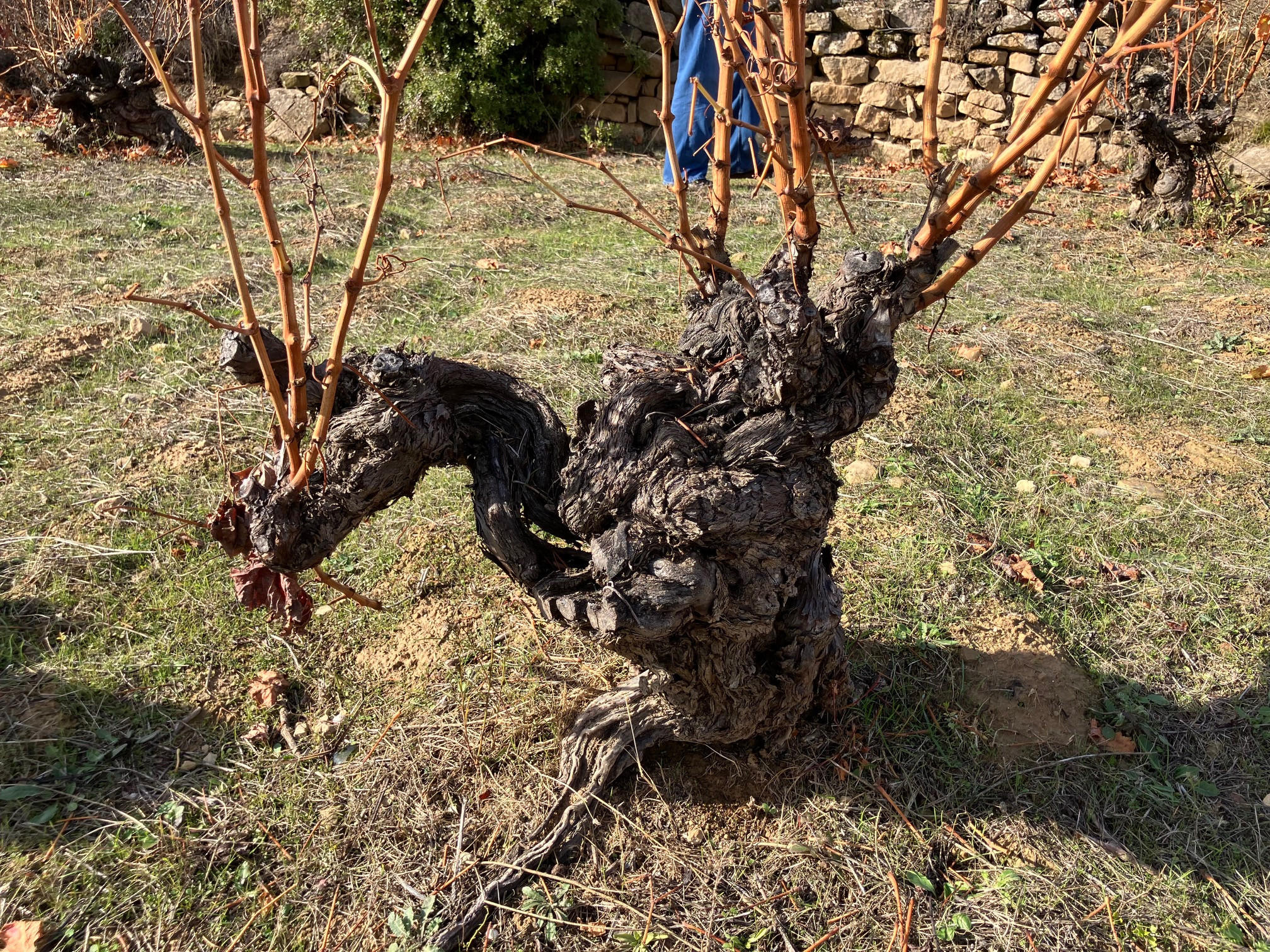
A 100-year-old vine in Navarra
A new horizon
As rural Spain faces depopulation, old vineyards are helping to anchor communities, giving younger generations a reason to stay. Across Navarra, Calatayud, Cariñena and beyond, dynamic winemakers are tending ancient plots and producing wines that truly express their origins.
From bright, 12% Garnacha Nuevo (akin to Beaujolais Nouveau) to powerful, 16% American‑oak‑aged styles reminiscent of Barossa Shiraz, Garnacha is proving itself time and again to be an extraordinarily versatile grape.
Back in Rioja, particularly the large sub-region of Rioja Oriental, a revolution is taking place. Wines made from 100% Garnacha are increasingly competing with the best Tempranillos for ageability, desirability and, of course, price. Long live Garnacha.
Browse our range of Spanish Garnachas here.



