

Seasonal hosting: tips and tricks
Written by

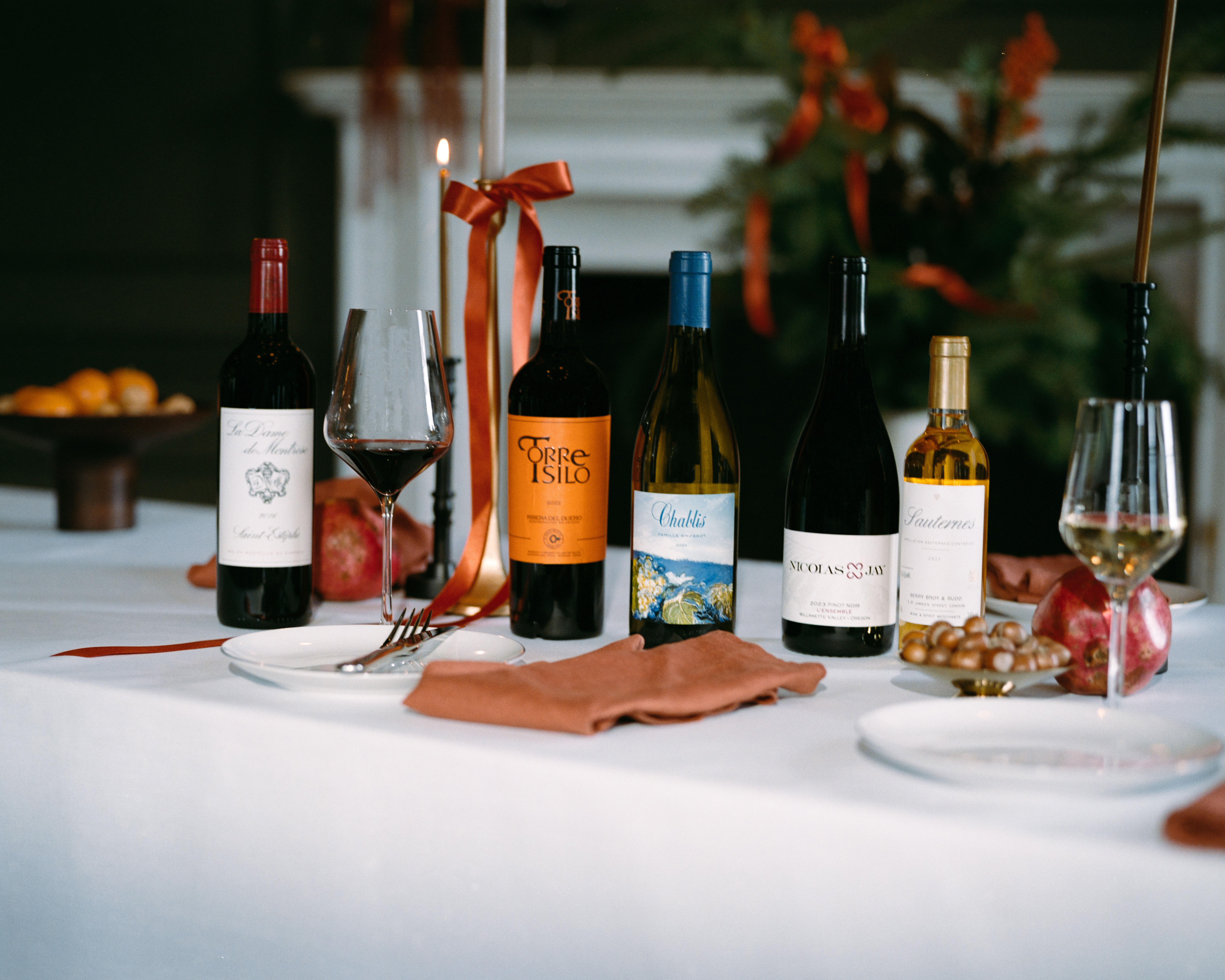
Hosting season: the year tilting into darkness, but our homes lighting up with glittering gatherings. As our thoughts turn to the pleasures of indoor entertaining, wine naturally comes to the fore. There's nothing quite like uncorking a beautiful bottle in the company of friends – especially one that's been carefully chosen and saved for the occasion, knowing how much it will delight your guests.
There are three key pillars to great hosting: atmosphere, interesting conversation, and good things to eat and drink. With a few simple tips and tricks, you can pull off a delightful dinner party with minimal fuss.
Start as you mean to go on
The welcome drink sets the tone for the evening, and sparkling wine is traditional here. It signals an air of festivity, immediately putting your guests in a good mood. It also offers the perfect ice-breaker, giving your guests – some of whom may still be strangers to one another – something to bond over. A focal point, so to speak.
You can never go wrong with Champagne; the more interesting, the better. Depending on your budget, you could seek out something by an artisan or biodynamic producer – a bottle with a story to tell, or methods to debate.
There are many fantastic sparkling wines that fall outside the Champagne category too. One such wine is the Crémant de Limoux in our Own Selection range; offering exceptional value for money, it has proven a firm favourite for special occasions.
Keep things easy in the kitchen
The best kind of dinner party is the sort that requires minimal fuss, leaving you relaxed and free to mingle, make introductions and keep conversation flowing – after all, you may know your guests better than they know each other.
Food-wise, it's worth thinking about rustic, homely food where most of the work is done by the oven. Generosity wins out over fancy tricks; no one wants to be left hungry. Roast chicken stuffed with oregano and crusty bread, slow-cooked lamb shoulder with root vegetables, or meat-free options like a mushroom wellington or aubergine parmigiana – dishes such as these can be prepared in advance, freeing you up to join the party.
A hands-off approach
No-one likes that awkward moment when their glass is empty, and they have to catch the attention of the host. To avoid this, you could place a selection of drinks on the table and allow guests to help themselves. The key is making your guests feel comfortable, as if they are in their own home – this, in essence, is what hospitality is all about.
While guests are waiting for the main dishes to be ready, make sure there are plenty of snacks so that nobody is going hungry. There's no need to overcomplicate things – crisps, olives and almonds are perfect, and almost everything goes well with Champagne.
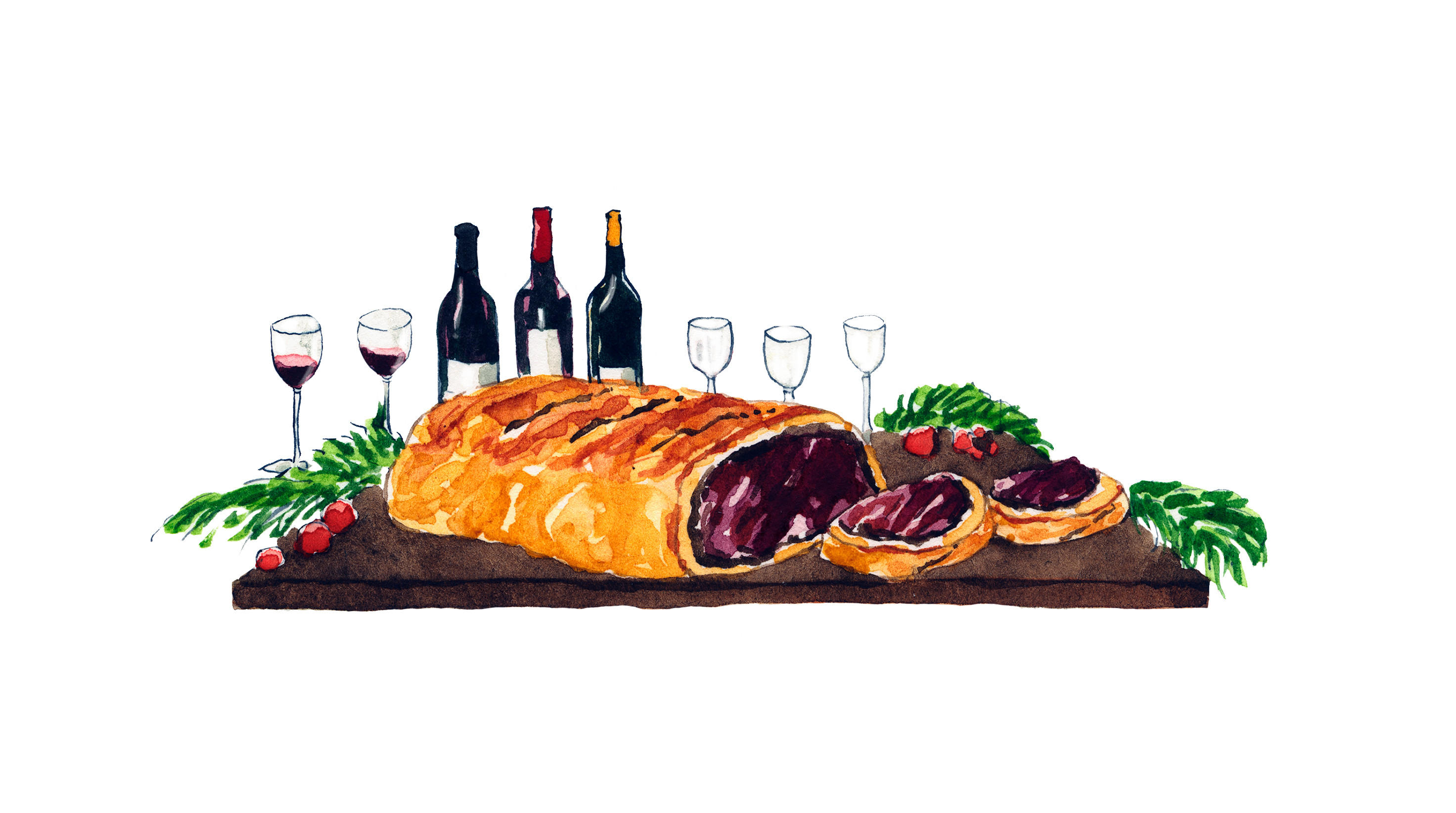
Illustration by Eleanor Crow
Think about food pairings
To the uninitiated, the prospect of pairing food and wine can feel daunting. There are no concrete rules (and all rules are there to be broken) but there is a logic of sorts, and with a few key principles in mind, it may be easier than you think.
Firstly, you should think about the texture and weight of your flavours. Traditionally, we tend to move from white to red, and from lighter flavours to heavier. A starter is typically a light affair – something to whet the appetite rather than to immediately sate – and you'll want something similarly light on its feet to match. More often than not, this tends to be a white or rosé – something with high acidity and a lovely freshness. Look to styles such as Albariño, Chablis or Sancerre.
For the main course, the right wine will vary depending on what you are serving. A key principle to bear in mind is that tannin binds with protein and fat, so if you are serving a rich red-meat dish, you'll want a high-tannin wine to match. Barolo, Cabernet Sauvignon and Syrah/Shiraz are all excellent here. Roast chicken, on the other hand, pairs nicely with richer whites such as oaked Chardonnays and Viognier; and for fish courses, you'll want something light and fresh, with delicate fruit notes that won't overwhelm the subtle flavour of the fish.
In terms of vegetarian dishes, earthy flavours such as mushrooms, lentils and aubergine are fantastic with Pinot Noir and Cabernet Franc – both these styles have notes of red fruits complemented by a subtle spice. Bright tomato sauces are a natural match for a high-acidity Sangiovese, while roasted root vegetables are delicious with richer, full-bodied Chardonnays.
As a general rule, anything deep-fried and fatty – such as fish and chips, arancini or schnitzel – calls for a refreshing, high-acid wine to cut through the richness. Champagne, English sparkling wine and austere, bone-dry Rieslings are all perfect for the task.
You can also think about sweet and salty pairings. Off-dry Rieslings are wonderful with Thai and Chinese flavours, which tend to have a little sweetness, and the sugar in the wine helps to temper the heat of the chilli spice. For after-dinner snacking, rich and salty blue cheeses are beguilingly good with a small glass of Port or Sauternes.
What to bring to someone else’s dinner party
If you are a guest, a bottle of wine is always a welcome contribution. You could go two ways about this. In the first instance, opt for something crowd-pleasing and versatile. Taste is subjective, but there are certain styles that (almost) everybody likes. Red Bordeaux and white Burgundy are classic, well-known styles that few are likely to turn their nose up at. Both of these regions produce some of the world’s longest-lived wines, but they also offer plenty of easy-drinking bottles that are made to be enjoyed young.
The other option is to bring something a little more unusual or lesser-known. This works particularly well if your dinner party group is made up of fellow wine-lovers, offering an interesting conversation point. The options are endless: herbaceous Dafni wines from Greece; oak-aged New Zealand Sauvignon Blanc; oxidative white wines from the Jura; dark, oak-aged rosés from Rioja. This is where it helps to pop into the shop – ask for the weirdest and most wonderful wine they have, and see where it takes you.



