What are amphorae?
Written by


An amphora in the cellars of Eben Sadie in the Swartland, South Africa. Photograph: Jason Lowe
Elegant conical-shaped clay jars have been used to store and transport goods since the end of the Stone Age. Smaller jars – often ornately decorated for use at the table – were known as amphorae, while their larger, more functional counterparts were called pithoi. While used for all sorts of goods, the Greeks and Romans commonly made and stored wine in these jars. Although at that point in time, honey and spices were often added to make the wine taste better.
Since then, however, amphorae have been left behind as winemakers discovered the use of barrels, then cement tanks, then stainless steel – before the cycle started all over again.
In Georgia, however, where wine has been made for over 8,000 years, amphorae, known locally as qvevri, never fell out of fashion. In fact, this traditional way of making wine is such an integral part of the culture that it was recognised by UNESCO in 2013.
But how do winemakers use these clay pots? Once the grapes are picked and pressed, the grapes, their skins and stalks are put in the amphora, which is then sealed. The fruit is then left with its natural yeast to ferment without any additions. The natural tannins found in the grape skins, pips and stalks provide a natural preservative, meaning winemakers can add little to no sulphur. This means that white grapes – conventionally made without their skins – become orange wines, the skin contact imparting colour, flavour and tannin. The conical shape means that yeast and sediment settles naturally at the bottom of the pot, meaning there is less need to filter or fine the wine.
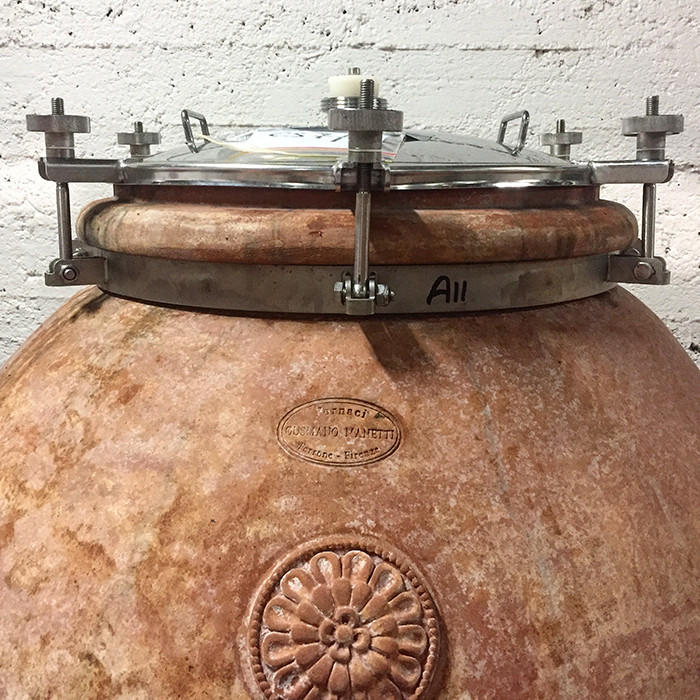
An amphora in the cellars at Cullen, Margaret River, Western Australia
Proponents argue that amphorae allow micro-oxygenation. Like wood, the porous clay lets in a tiny amount of oxygen, which can help soften tannins and flavours – but, unlike wood, clay doesn’t add any additional flavours of its own, providing a pure expression of the grape and place, rather than winemaking. This low level of oxygen is also thought to help stabilise the wine, further reducing the need for sulphur. Clay, like cement, is also an excellent thermal conductor – meaning the heat from fermentation is released rather than contained (which would kill the yeast). As a result, there is little need for temperature control by other means (especially if the amphorae are buried, as was traditional historically).
Given the reduced need for sulphur, amphorae are primed for natural winemaking; and it was a handful of now iconic names who pioneered the modern use of amphorae. The northern Italian stars Radikon and Gravner – famous for their orange wines and natural philosophy – started using these vessels as part of their hands-off approach, a reaction to modern industrial winemaking.
Today, however, you’ll find amphorae in cellars around the globe, from South Africa and Australia to Bordeaux – and they are far from limited to those crafting natural wines. They fit neatly with the trend for low-intervention wine, as winemakers seek to respond with ever more “authentic” wines. For many winemakers, amphorae are yet another tool – to be used alongside their choice of oak, stainless steel, cement and more, used to ferment or just age their wines. Whether or not they’re a passing trend, only time will tell.