What are organic wines?
Written by
Organic wines focus on two key principles; growing grapes organically in the vineyard and fermenting those grapes organically in the winery. In some parts of the world, this distinction even extends as far as the label. For example, in the US, “organic wine” is pretty rare. “Wine made from organically grown grapes” is far more common. But what does this really mean?
In the vineyard
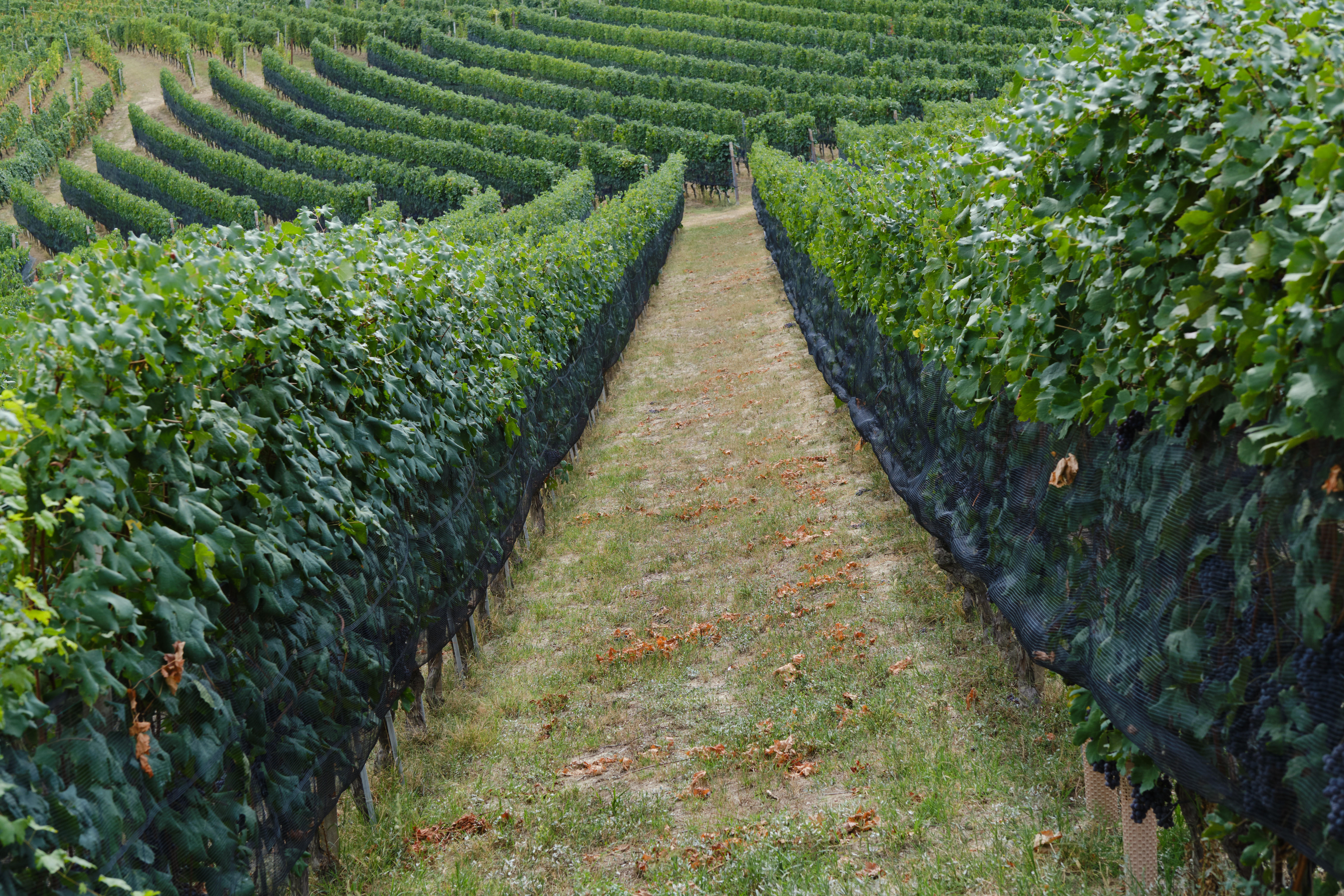
It’s said that great wine begins in the vineyard, and this is never truer than with organic wine. There is a dark triad of challenges that growers face in their vineyards; pests, fungus, and mildew.
Pests, such as moths and beetles, may nibble the grapes, laying larvae in them and causing huge damage. Fungus and mildew, such as downy mildew or grey rot, are conditions which, as their names suggest, cause the grapes to rot, the leaves to go mouldy and for the quality of the harvest to drop considerably. And weeds can cause huge problems, springing up around the vines, and between the rows, making tractor passes slippery. They can also draw up water and nutrients from the soil, competing with the vines.
In organic viticulture, each of these issues is managed without resorting to synthetic chemicals. The weeds may be manually hacked back, or kept in check by sheep or chickens (the added bonus being fine fertiliser for the vineyard). Pests may be controlled with predators such as birds, or by using pheromone tags, which prevent larvae from being produced.
Mildew and fungus are the hardest to manage organically, depending of course on your climate. Managing mildew in the warm and sunny climes of Southern France is an entirely different thing to managing it in the damp, grey environs of Essex. To tackle mildew, producers rely on a handful of products, most notably “Bordeaux mixture” – a blend of copper and sulphur. This is sprayed on the vines, and helps prevent the development and spread of fungal spores.
Such treatments are, however, not without their challenges. Many of the solutions are very manual – time consuming, labour intensive and exceedingly impractical for larger vineyards. These sprays also have their drawbacks: there are strict limits on copper levels in soils for all types of farming. The reason is that copper, as a heavy metal, builds up quite quickly in the soil, and can be toxic to much soil life, including earthworms. Overreliance on Bordeaux mixture therefore can be detrimental to the vineyard in the long-term.
The result of all this is that organic grape growers must be careful about when they resort to such sprays, and only use the minimum viable amount.
In the winery
Once the grapes are harvested, there are also regulations around what may be used in the winery. For an organic wine, only organic additions may be made. That means if cultured yeast is used (specially selected yeasts rather than the yeasts naturally found on the grapes and in the winery) these must be certified organic. So too must any sugar, if the wine is being chaptalized (the practice of adding a little sugar to the juice, in cooler years, to result in a slightly higher level of alcohol in the finished wine).
Finally, and perhaps best known, organic wines have lower legal limits on the sulphite levels in the bottle. Sulphites are preservatives which are added to almost all wines, at very low levels, to help protect them from oxidation. Organic wines are not sulphite free – and most producers still do use a small amount of sulphites to help preserve these wines whilst in bottle. But the limits are lower than for “conventionally made” wines. Of course many producers go nowhere near these limits.
What’s on the label
Labelling can be a minefield. Whilst many producers practice organic principles, they may choose not to certify their wines as organic. This is because certification can be time consuming and involves a lot of administration – something many small producers simply do not have the resources to do. In addition, many certification schemes charge a percentage of sales as their fee. A producer may need to pay up to 2% of their turnover to a certification body.
On the other hand, many producers find that having a green leaf, or a label saying Soil Association certified, is a reassurance, to them and consumers, of the work they have put in.
There is no one certification body – they vary by region. And indeed if a wine is certified organic in the country it’s made in, it may even be it can’t be sold as organic in another country – without recertifying with that country’s body. The result is that many wines are made “according to organic principles” without having certification.
Increasingly some producers find the risk of extreme weather events, caused by climate change, has made certification impossible. In Burgundy in 2024 the weather was extremely challenging, with heavy rain. Mildew was a problem for many growers and some who were organic abandoned certification, and used synthetic fungicides to try and salvage their crop. They will now have to go through a recertification process, that takes a minimum of three years, to regain their organic status.
It’s a matter of taste
The overriding question for many consumers is do these wines taste different? The answer is it depends.
Many organic wines are made with particular care. The dedication to protecting the environment shines through in the attention to detail in the vineyard and winery. The result is wines that sing with life.
Personally, I often find that wines I particularly enjoy, or that speak to me, are those which are either organic or are made with close adherence to organic principles. Perhaps this has something to do with the growers’ close connection to the land, and care for the vines, and grapes, that come from it.
The choice, though, is yours. Wines on our website which are certified organic are labelled as such. We also have a selection of wines made according to sustainable principles, which incorporate many aspects of organic viticulture.