

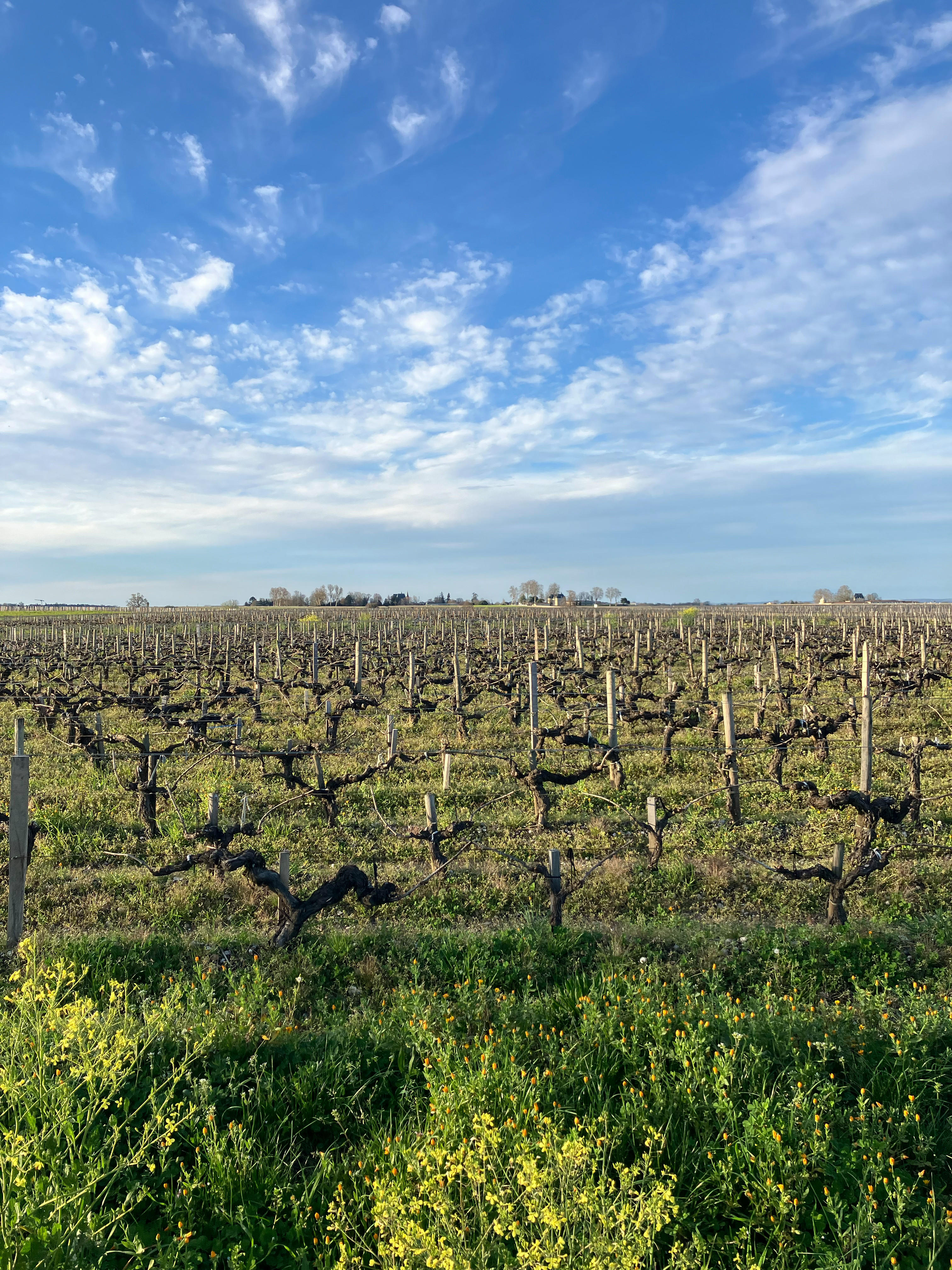
Bordeaux notes: off-road in St Julien
Written by

It sounds and smells a little bit like the engine is overheating. “Don’t worry, this is normal,” the driver looks back over his shoulder. He’s had this old open-top Land Rover for 10 years; hopefully, he knows what he’s talking about. He navigates up a bumpy little incline, along a dirt track and through some puddles. Glass clinks in the back. An excited dog runs from side to side but has the discipline not to jump out – until we pull over. No sooner has the dog hit solid ground than she is away, splashing around in the nearest, deepest puddle. She returns at speed, muddy and frenetic. I fear for her master who, I should point out, is wearing beige chinos and suede loafers. But he doesn’t panic, and he somehow remains spotless.
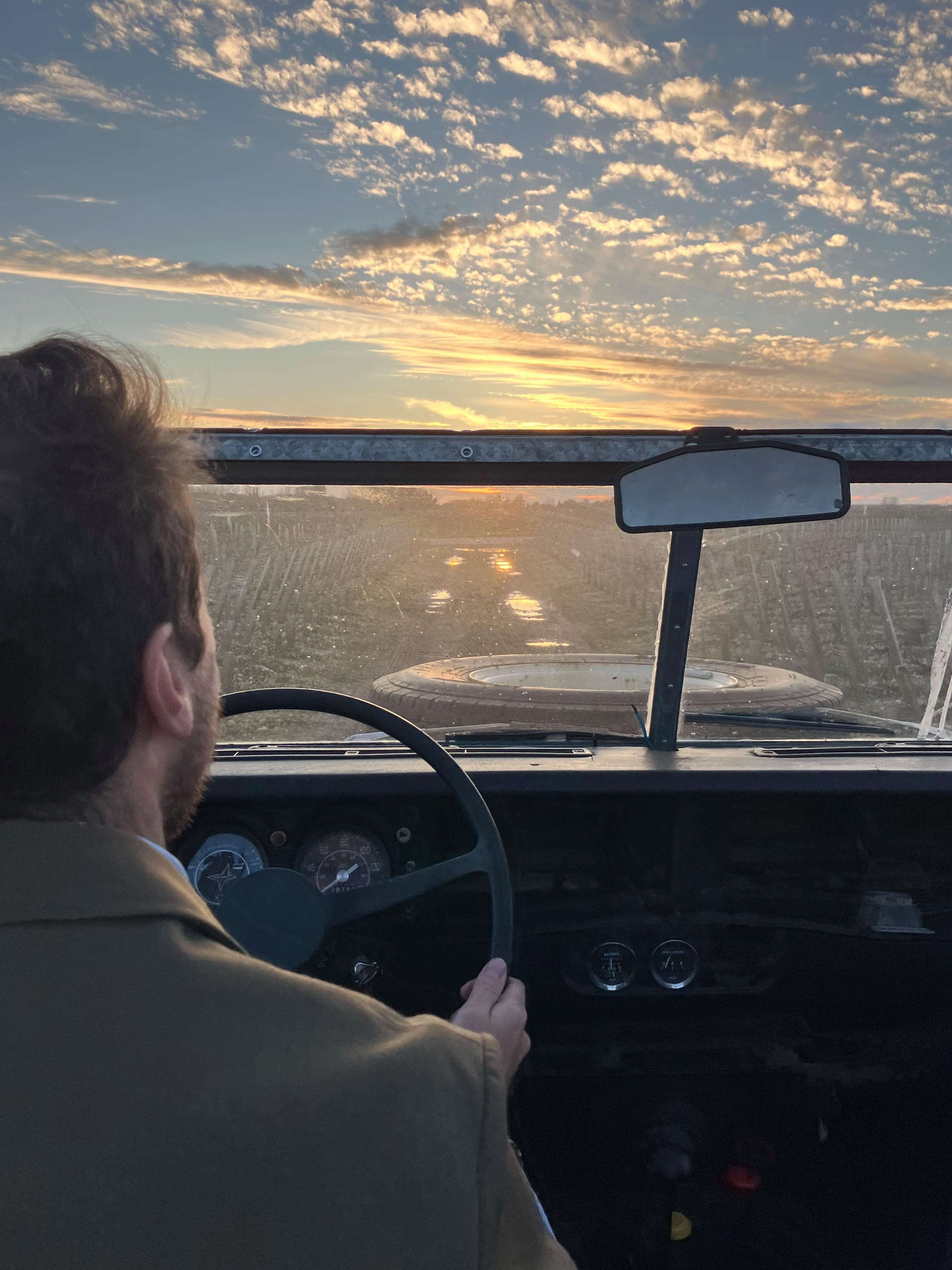
Damien Barton Sartorius behind the wheel
Damien Barton Sartorius is no stranger to the outdoors: he’s a licensed Game Ranger and is known to spend time on safari in South Africa. We’re not in the bush now, though. Today, his range extends to little more than 70 hectares of vines in St Julien – the combined holdings of his family châteaux, Léoville Barton and Langoa Barton.
He’s taking us on a whistlestop tour of his vines. I’m with a couple of colleagues and we’re here to get an early sense of the 2023 vintage. That clinking glass: sample bottles of unblended wines, drawn from barrel just this afternoon. We taste each in the specific plot from which it has come.
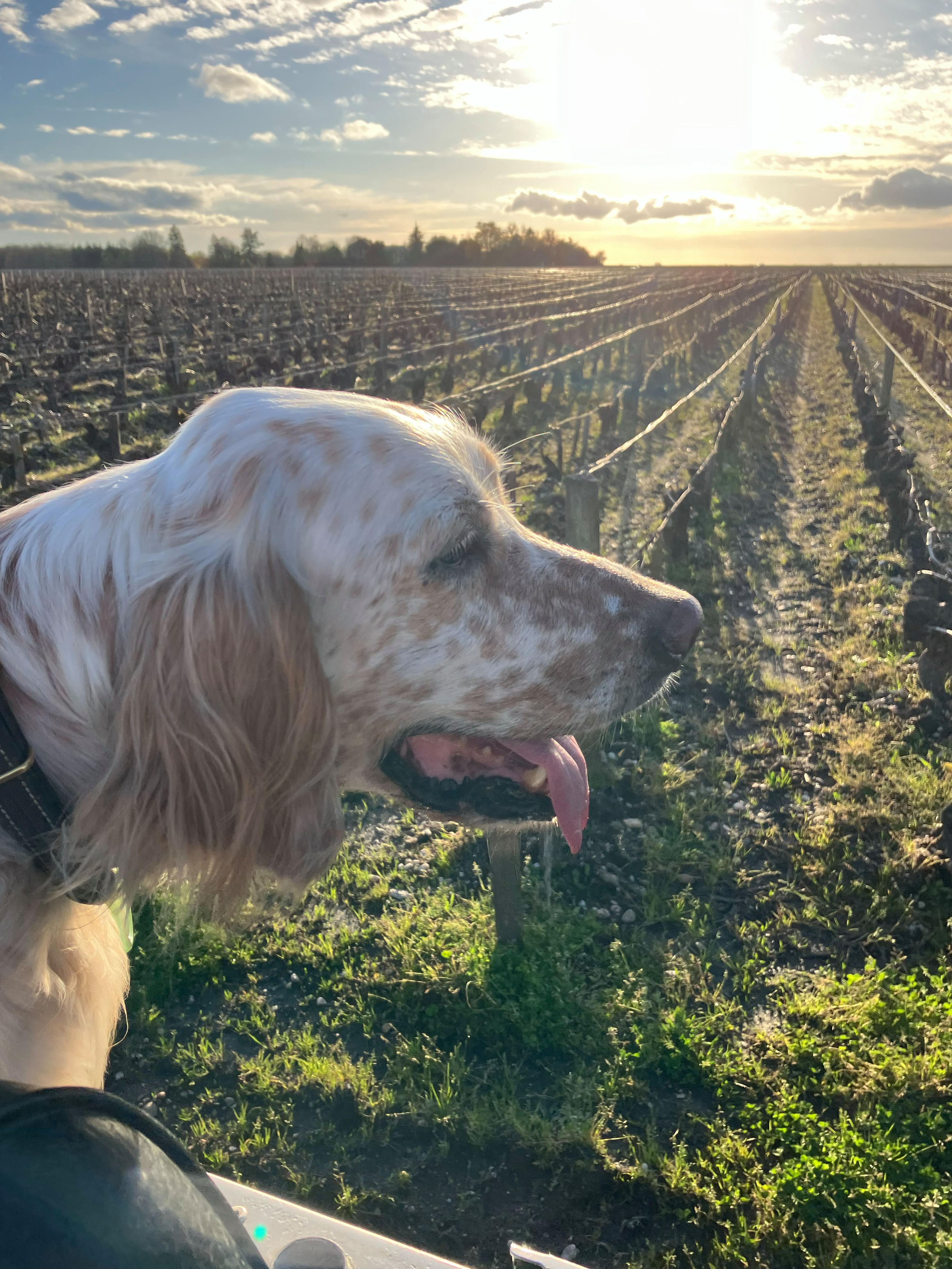
Izarra Barton Sartorius catches some rays
We try a dense, concentrated Cabernet Sauvignon with our feet on the big, old gravel soils in which these very vines have grown; in an adjacent, similar-looking plot, there’s a powerful Merlot that could be a Cabernet. Then there’s a Cabernet that tastes like a Merlot, and a Merlot that just tastes like pure, bright summer. There’s fine, perfectly ripe Cabernet Franc, without a hint of greenness. The landscape shifts quickly and frequently, and more dramatically in parts than I would’ve expected: big stones here, quite fine sand there. In a clearing beside a small wood, two gravelly plots look much the same to the naked eye; they’re a few hundred thousand years apart in age, Damien says.
The dozen or so samples we taste are just a part of what goes into making the Bartons’ much-loved wines. Elsewhere in St Julien, and throughout Bordeaux, it’s a similar story. There might be an illustration of a château on the label, sometimes even one surrounded by vines. But it’s a rare occurrence for all of a producer’s vines to surround the château or to form one single block; far more often, it’s a patchwork of different plots.
Critics of the region will sometimes pit Bordeaux against the pure terroir expression of Burgundy. A good bottle of Burgundy might come from a piece of land little bigger than a London back-garden, produced in microscopic quantities. Your typical Burgundian grower might make five or ten or more bottlings like this, each being, more or less, the fruit of one site.
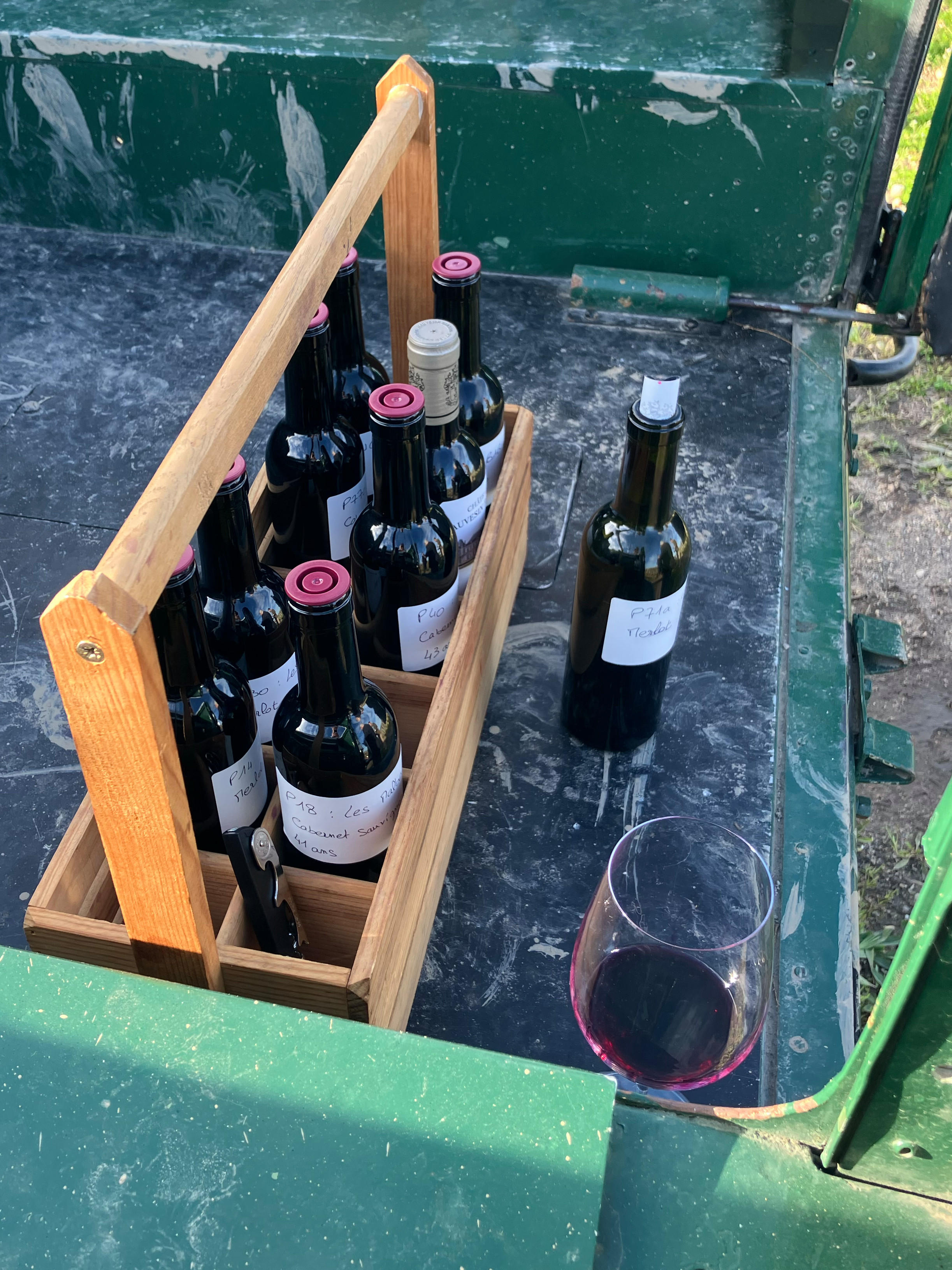
The makings of the 2023 Barton wines
Things work a little differently in Bordeaux. A top château might have a larger overall vineyard holding than its counterpart on the Côte d’Or, though it will likely bottle just one or two wines. The best châteaux are discerning and precise, carefully managing each individual parcel, whatever and wherever it may be – and then assembling the cream of the crop with skill, thought and consideration to form a cohesive, high-quality blend. Lesser châteaux may do things a little differently: a kitchen-sink blend of random parcels, scattered far and wide. At worst, these might be unconnected plots of land, bearing little resemblance to each other and with wildly varying quality potential. And fair enough, those wines aren’t worth seeking out. But sadly, the good and bad tend to get lumped in together by detractors who will say that Bordeaux is the sort of wine you make, in a winery, as opposed to the sort of wine you grow, in a vineyard. Somehow a less authentic and lesser reflection of its origins. So the argument goes, at least.
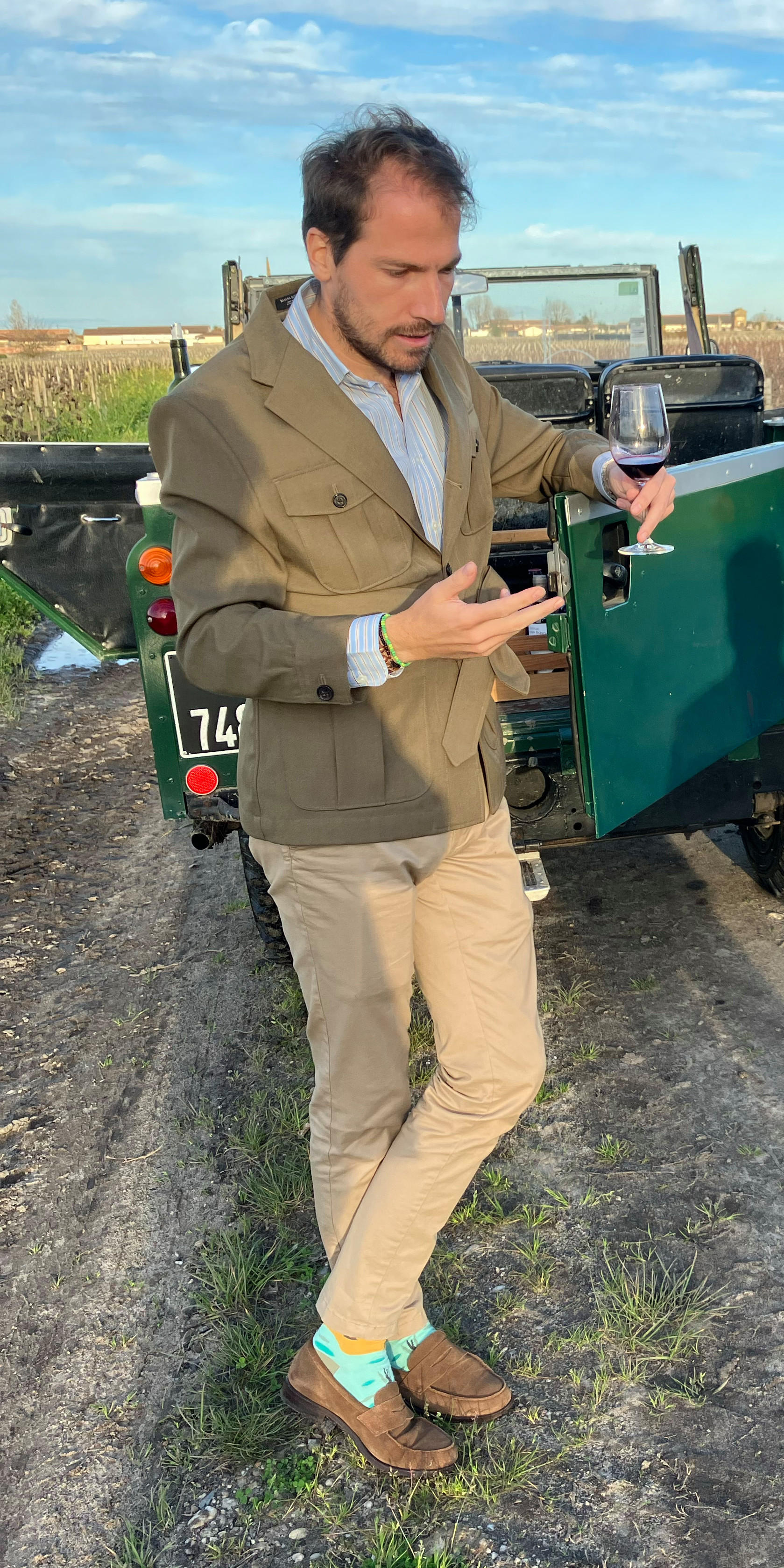
Talking – and tasting – terroir
This tour of the Barton plots makes a compelling counterargument. As it happens, most of the parcels are close to one another, but it’s their diversity that makes them such worthy contributors to a larger overall blend. The samples we taste are pure and lively, full of fruit. And they’re distinctive. They are characters, and have character, of their own. I’d be genuinely curious to see how some would develop as single-site wines over time. Though that would rather miss the point. The fact that Bordeaux wine is made up of so many composite parts is not a weakness but a strength. Tempting as the idea of a single-plot Cabernet Sauvignon or Merlot bottling may be, it would seem a shame – a disservice, even – not to make full use of those individual components through blending.
Damien’s maternal grandfather was the late Anthony Barton, one of the most widely respected figures in Bordeaux wine history. There have been Bartons involved in Bordeaux wine for nearly 300 years, and they’ve been growing grapes and making wine in St Julien since 1821. Prior generations may not have always fully understood the scientific reasons why a certain plot was more likely to yield a bigger or smaller crop, or why it was better suited to Merlot or Cabernet.
But that these wines have had such a following for as long as they have is no accident. And in this the Bartons aren’t alone. Earlier generations understood instinctively that in Bordeaux the whole is greater than the sum of the parts. People like Damien and the many other talented young leaders in Bordeaux wine today are just building on that with ever greater analysis, precision and ambition.



