


Georgia Mehlhopt, the future of Greystone Wines
Written by

Georgia Mehlhopt doesn’t consider herself an overachiever, though she concedes that she’s “heard it quite a lot” from other people. She is the head winemaker at Greystone Wines in New Zealand and has won a couple of very prestigious Young Winemaker of the Year and Young Viticulturist of the Year awards. Which would all be impressive enough anyway it if weren’t for the fact that Georgia is a 30-year-old who has only been in the wine business for six years.
Searching for a path
Like many of us, Georgia didn’t always know what she wanted to be when she grew up. She was home-schooled, which instilled in her the admirable conviction that she could do whatever she wanted in life. The only problem there, it seems, is narrowing it down to doing one specific thing.
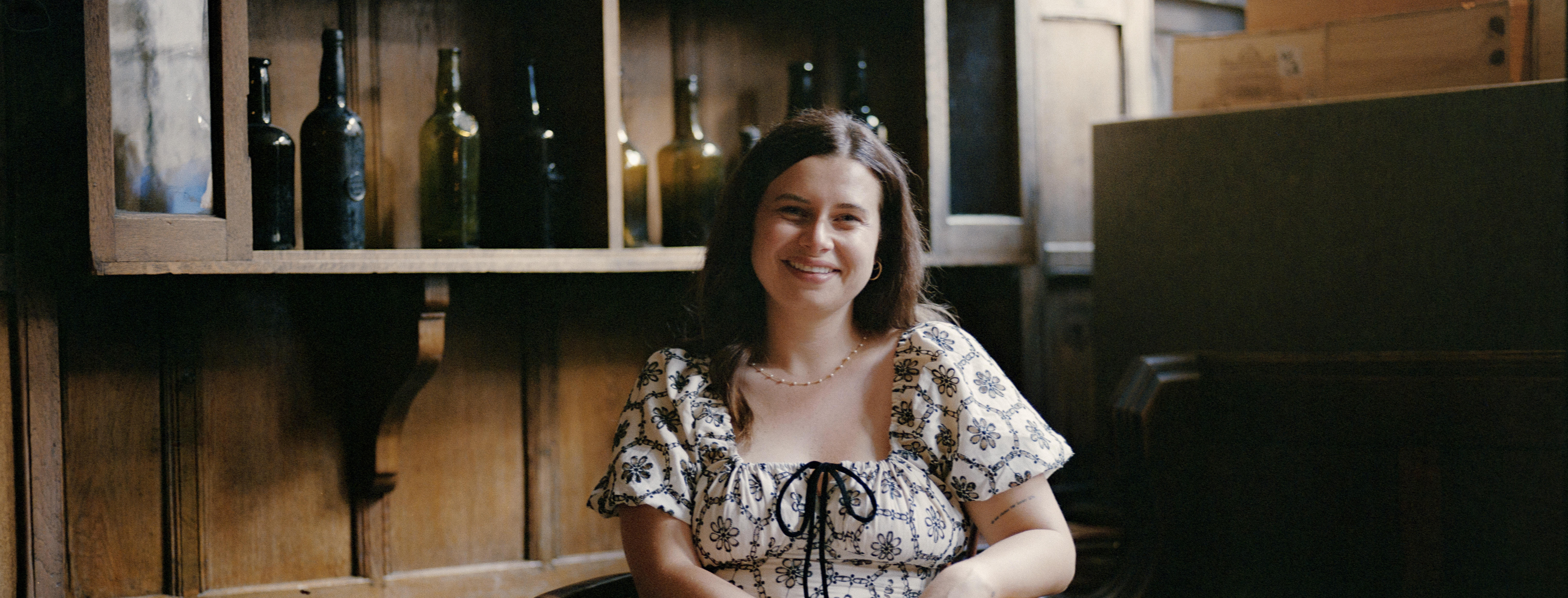
Georgia Mehlhopt, the award-winning winemaker at Greystone
Along the way, she tried her hand teaching English in Laos; worked as an emergency communicator for the New Zealand Police; and earned a law degree from the University of Canterbury. Some people would’ve celebrated that last one with a relaxing holiday. Instead, Georgia headed to Europe and walked the 800km Camino del Santiago through France and Spain.
Passing through the vineyards of Rioja at the height of summer, she would occasionally stop and find herself chatting with the people working the vines. The ensuing conversations, and “a lot of sangria”, got her thinking that maybe there was another way to go – “that winemaking could be a cool career”.
Choosing wine
So she returned home with a choice: law or wine. And like any self-respecting overachiever, she thought she’d do both. As she finished her professional legal studies and was admitted to the New Zealand bar, she was also studying viticulture and oenology at Lincoln University. “It’s only a year out of my life,” she had told herself. “And if I don’t like it, I can always go back to law.”
Evidently, she liked it. Having initially fancied vineyard work, she set herself the ambitious goal of becoming head winemaker “somewhere I was really proud to work”. This would be no mean feat, she knew: New Zealand has a lot more vineyards than it has wineries, “so getting those top winemaking roles is really difficult”.
Difficult, maybe, but not impossible. Georgia secured herself a traineeship at Amisfield in Central Otago, covering both the vineyard and the winery. It was a steep learning curve. She’d never studied chemistry before, so getting to grips with wine on a molecular level proved a challenge. There was also the sheer hard graft: leaf-plucking in 35°C heat, winter pruning in freezing temperatures and everything in between. A couple of years on, she found her way to Greystone.
Finding Greystone
Greystone is a family-owned winery in Waipara, founded in 2000. There are 45 hectares of certified organic vines here, with an impressively varied range of wines, from Sauvignon Blanc to pet nat. But Greystone’s reputation is built on its Pinot Noir and Chardonnay.

Harvest time in North Canterbury
Georgia already knew of the estate, because she had reached out to the team for advice in her early days. With a little more experience under her belt and a better understanding of her end goal, she paid a visit to then-winemaker Dom Maxwell. He offered her a cellar-hand role there and then, which she jumped at. This marked the start of her “serious” winemaking career, she says.
She then embarked on a little “vintage hopping” – or as much as was possible given Covid-related restrictions – in Australia and Canada before returning to Greystone as assistant winemaker. She did that for a year until Dom tapped her on the shoulder: “He said he was leaving and asked if I would take over the role.” No prizes for guessing her answer.
Stepping up
In wine, you often hear about new generations taking over family estates and bringing fresh ideas. Considerably less often do you come across a first-generation winemaker, barely out of their 20s, who comes along and assumes the day-to-day running of an established winery. For that winemaker to be a woman is, sadly, even rarer still.
Georgia very clearly respects what – and who – has come before her, though she acknowledges that “there were things stuck from the olden days”. She takes up her new role, as a decision-maker and a leader, at a time of profound change for the New Zealand industry. There’s a national oversupply of grapes, she says, notably of Sauvignon Blanc and Pinot Noir. Though she is confident that small, “boutique” producers like Greystone are not in the same boat as large producers of bulk wine, she knows now is not the time to sit back. “The market is changing all around the world. I hope that we’ll come out on the other side in a much better frame of mind.”
An evolution of style
The best part of Georgia’s job is the autonomy that comes with making decisions, of “having a voice”. I wonder what that will mean for Greystone’s wines. It’s not uncommon for a new boss to want to shake things up, after all.
It’s still early days on that front. She and her predecessor “have very similar palates and decision-making processes”, she says On the other hand, “we’re different people, and I’m sure that will impart onto the wines.”
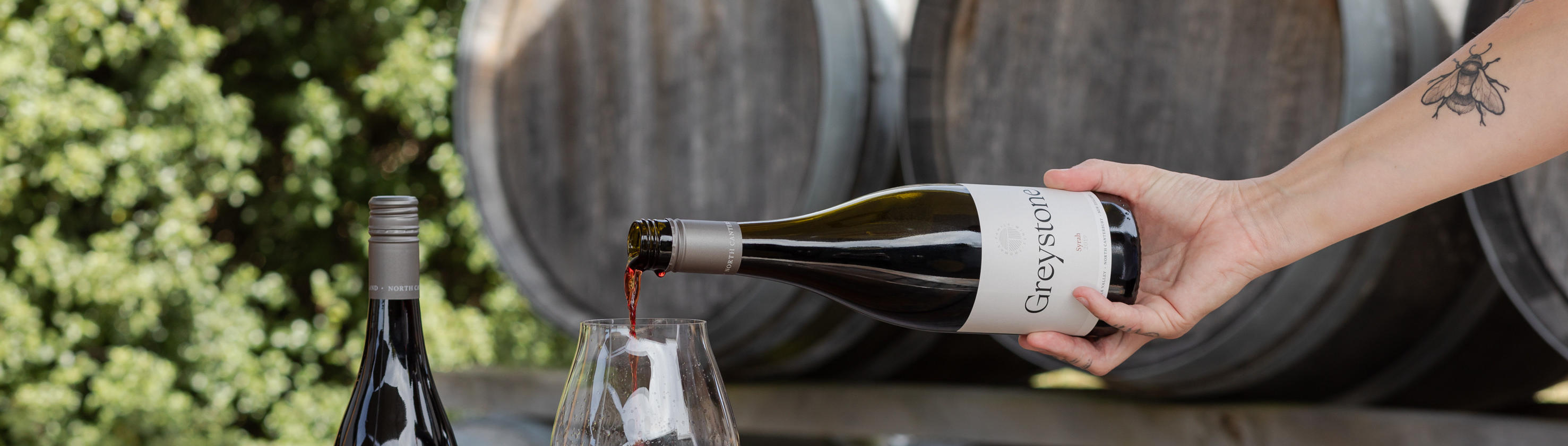
Greystone makes an impressively varied range of wines
She believes the style will “evolve and change”, notably for the Pinot Noir. The North Canterbury region is known for its “deep and dark and savoury, quite big and tannic” expressions of the grape, Georgia says. “But I prefer to drink Pinots that are softer and more elegant, a little lighter on their feet. So I’m hoping to bring that into our house red style a bit more, while still sticking to the traditional Greystone feel of the wine.”
By contrast, she’s “hesitant” to change the style of the Chardonnay or Riesling too much, except for “little tweaks here and there, just to see if there’s that one percent better that we can be”.
The power of small changes
Greystone has organic certification and the vineyards are “farmed regeneratively without certification”, Georgia says. Beyond this are all sorts of initiatives, big and small, designed to make the operation more sustainable.
Highlights include raising the vine canopy so that the vineyard can be grazed year-round by sheep, with less of a need for tractors – leading to less compaction of the soil and a considerable drop in diesel emissions. The tractors they do use, from Fendt, are among the most fuel-efficient available. They use paper ties for pruning, as opposed to the more common plastic clips. And they’ve reduced their bottle weights significantly, down to 417g (“one of the lightest on the market” and versus around 600g before), and they’re considering 360g options. “Small changes can make a huge difference,” Georgia says. (Though she’s quick to clarify that “there’s always more we can be doing”.)
“Trying new things is going to get us a long way; even if it fails, it leads you on to the next thing,” she says. “Being stagnant is our worst enemy.”
Winemaker’s notes: our Own Selection New Zealand Pinot Noir by Greystone Wines
“This wine comes from multiple blocks across our different soil types, so you get this wine that’s balanced, with a beautiful texture that carries a lot of flavour.
“You also get that bright acidity in there, and that lift that makes it a fresh, vibrant wine that I particularly enjoy.
“It’s quite typical of North Canterbury, I find. It can be smoky, umami, sort of mushroomy; you often get that forest-floor vibe going on. And then you get the Pinot Noir cherry, red-fruit lift as well.
“I really like it with a nice beef rump or steak frites.”
Georgia Mehlhopt, Greystone Wines



