

Profiles on Burgundy
Written by
I’m often thrown back to my mindset at the beginning of my career: a 22-year-old foreign-languages graduate, scurrying around in the background of a Master of Wine-led masterclass. Surrounded by enthusiastic punters and knowledgeable winemakers, frantically putting stickers on glasses. Trying to absorb as much as possible of what was going on around me.
It really doesn’t matter how much experience you have, how many qualifications under your belt – there are always new things to learn in wine. Ten years in, I’m experienced in retail, buying, tasting, travelling, event hosting and sales, and with all my WSET qualifications achieved. And I’m still taken aback with new-found wonder at the wines I’m tasting in Burgundy.
Exploring Burgundy
Though it’s not a region I had professionally focused on before, it’s impossible to ignore the reverence with which Burgundy is referenced in our world. The most ethereal of reds, the most complex of whites, the most rewarding to cellar, the perfect accompaniment to any food or occasion: the list of superlatives goes on. So, when the opportunity to get involved in Burgundy came along this year, I jumped.
The 2024 vintage has been an interesting one to start with, though most growers used other words to describe it. I heard “catastrophe” and “complicated” many times. I saw wry looks and shadows behind the eyes as they remembered the struggles at flowering; the many sprays, trying to stave off mildew between bouts of rain; the hours of backbreaking work huddled over the sorting table, watching as kilos of grapes are discarded, leaving very little wine despite all the hard work throughout the year.
Selfishly, 2024 is a beautiful vintage to taste. It’s one where you can truly understand why people have lauded the terroirs of the Premiers and Grands Crus – as they say, the flower that blooms in adversity is the most rare and beautiful of all.
But it was meeting the producers – the people and personalities behind these celebrated vineyards – that really brought the wines and the region to life.
Domaine Michel Lafarge
Frédéric, Chantal, Clothilde, Eleanore and Maxime-Henri Lafarge
A visit here feels a little like a family dinner: warm, cheerful and a bit chaotic. Each family member slightly talks over each other, a mild struggle for me as I try to calibrate my French-translation skills. But this is not from a lack of respect; they are all on the same page, and keen to share their passion.
Michel Lafarge, the legendary head of the domaine for over six decades, passed away in 2020. He oversaw the estate’s reputation as one of Volnay’s most traditional and respected. The family introduced biodynamic practices in the 1990s and were also, incredibly, one of the first in Burgundy to sell their wines in bottle rather than in bulk to négociants.
His son, Frédéric Lafarge, has been at the helm since 2020. He is far from a stranger, having first joined in 1978. Softly spoken and unassuming, Frédéric is a quietly authoritative winemaker, deeply rooted in Volnay’s traditions. He prefers to let the wines and the quality of his terroir speak for themselves rather than chasing trends. He shares a lot of his knowledge during the tasting, but these days, the winery is a family affair. And the ninth generation are taking centre stage.
Clothilde Lafarge, Frédéric’s eldest daughter, is increasingly involved in the winemaking. She has been here full-time since 2018, after completing her oenology and viticulture studies and gaining experience outside of the estate. She is just brimming with energy and passion for the wines we taste. Her siblings, Maxime-Henri and Eleanore, contribute to the vineyard and cellar work, while their mother, Chantal Lafarge, leads Domaine Lafarge-Vial in Beaujolais.

Frédéric and Clothilde Lafarge, caretakers in Volnay
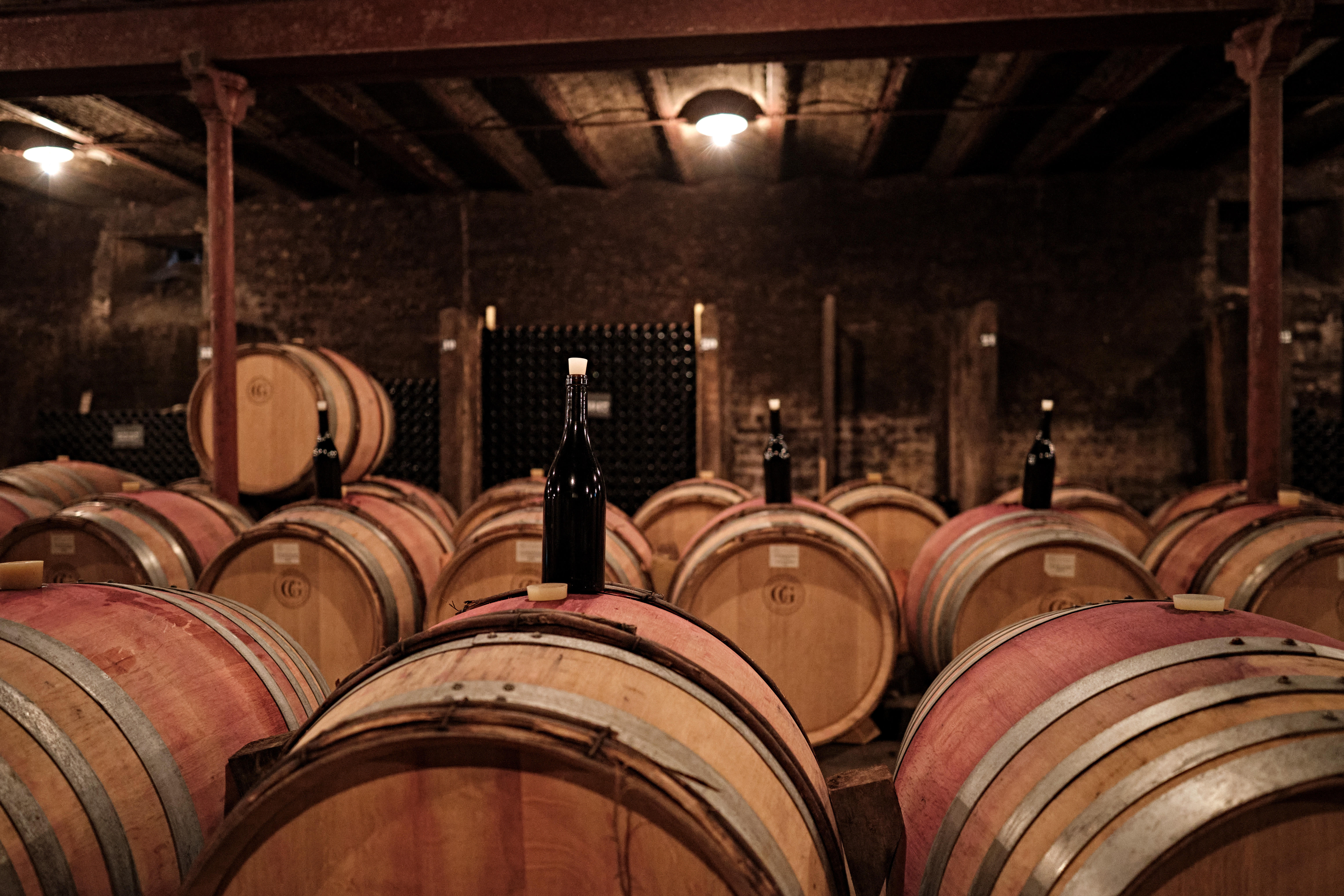
There’s something special about tasting in the Lafarge cellars. They have an ancient, rickety lift that takes you down, which I felt nervous to step into. But my more experienced colleagues and the smiling family were all perfectly at ease. It was just one of those elements that add character to the visit. Down in the cellar, there are scribblings over walls where famous critics have left their mark. Areas where the ceiling is curved just so, to allow a taller person to stand comfortably, give the feel of a cellar that has been lived in. This kind of energy really does come across in the wines; they are so expressive, feeling complete even before they’ve been bottled, assured of their own quality in the hands of these legendary caretakers.
Domaine de la Vougeraie
Sylvie Poillot
For many of my colleagues this is a favourite visit, due in no small part to the effervescent and genial Sylvie Poillot. Officially the General Manager since 2017, she has been a huge part of the team since 2002. Today she oversees all aspects of the domaine from vineyard operations to cellar management to welcoming the Berry Bros. & Rudd team with open arms.
I’ve never known someone with such professionalism and no-nonsense competence, yet boundless energy and time for other people. Vougeraie has a truly outstanding range, covering 37 appellations across the Côte d’Or. Sylvie and her team have an impressive work ethic – they are one of the few domaines using sorting tables for their white grapes, for example. If you thought running a winery would be a relaxing, romantic job, I would show you Sylvie. She never shows any strain, though: she is a powerhouse and always working.

The effervescent and genial Sylvie Poillot
It helps that these vineyards are among the region’s best. The wines are always outstanding, no matter the challenges of the vintage. When asked about the troubles of the 2024 vintage, she is brutally honest. Someone less confident of their quality output may have been tempted to play down the challenges that plagued the entire team during 2024. They had tractors slipping and sliding in the mud, entire bunches of grapes ejected from their precious journey toward becoming top quality reds and whites. The estate’s commitment to biodynamics is also a huge part of their culture. Every decision made in the vineyard and winery is done with their environmental impact in mind, for the vines, soils, animals and staff.
Sylvie describes how they keep up morale during the backbreaking days of sorting: they play a different genre of music for the different crus. You know they’re sorting through the Gevrey-Chambertin Les Evocelles when you hear the dulcet tones of smooth jazz echoing off the walls of the winery on a chilly September morning. It’s certainly what I’ll put on in the background when I next open a bottle.
Camille Giroud
Carel Voorhuis
After visiting family domaines with small holdings, to suddenly be confronted with over 20 cuvées lined up on a table is daunting. Unlike domaines that only work with their own vineyards, Camille Giroud is a négociant – they buy grapes from growers across Burgundy, then vinify, age and bottle under their own label. This affords them access to some of the most interesting terroirs in the whole region, and a flexibility rarely seen in traditional Burgundy.
Carel Voorhuis, the current winemaker and director, took over in 2016, though he has worked in Burgundy for decades. I thought this might be the one Burgundy tasting that is a little more business-like, more focused on the numbers rather than the story of the place. I was perhaps expecting wines that had been cherry-picked, wines made according to a “recipe”. I couldn’t have been more wrong.

Carel Voorhuis: humble, hardworking and extremely talented
I found myself floored with how humble Carel is, and how much work he puts in. He is an extremely talented, instinctive winemaker, with what Jasper Morris MW once described as a “welcome absence of dogma”. This is a sentiment I can now wholeheartedly agree with after spending nearly two hours tasting through his range and learning about how each parcel is treated. Carel is warm, approachable and open minded. He talks fondly of the growers he works with, many of whom he has known for decades.
Most people might think of a négociant as someone who stands at the edge of the winery, waiting for the grapes to arrive. Carel, however, is always among the vines, keeping an eye on how the vintage is going and on hand to discuss viticulture decisions with the growers. He does have access to around 1.2 hectares of domaine-owned vineyards in Beaune, though I honestly can’t see a delineation between the resulting wines. He treats each cuvée on its own merits, and they all shine with their respective personalities. The 2024 vintage was a small crop for everyone, but the gems that have made it into his range this year are truly worth treasuring.
Burgundy is so much more than a source of extraordinary Chardonnay and Pinot Noir, steeped in tradition and reserved for the most elite of dining tables. Every Burgundy producer I’ve worked with has their own distinct personality and style, united in their care and respect for their vineyards, wines and people. It is a joy to be reminded, in this world that lends such importance to market pricing, global trends and big brands, that at the end of the day you can be rewarded with delicious wine that has come from a place of integrity and genuine artisanship.



