


Glossary
Packaging
Notable findings on cases, capsules or closures. Any reference to a “CRD capsule” is because the wine has a CRD sticker, which is proof that the wine producer has paid taxes to the French government. and can legally sell the wine.
Appearance
Notes on imperfections on the label or bottle, that one might expect to see on a bottle that has been in storage for a prolonged period, e.g. dust or general dirt. Bin-soiling tends to be aesthetic only.
Other
Notes on any other elements of the bottle, including sale stickers or import labels.
Fill
Where the liquid within the bottle reaches when the bottle is standing upright. A more in-depth guide can be seen below.
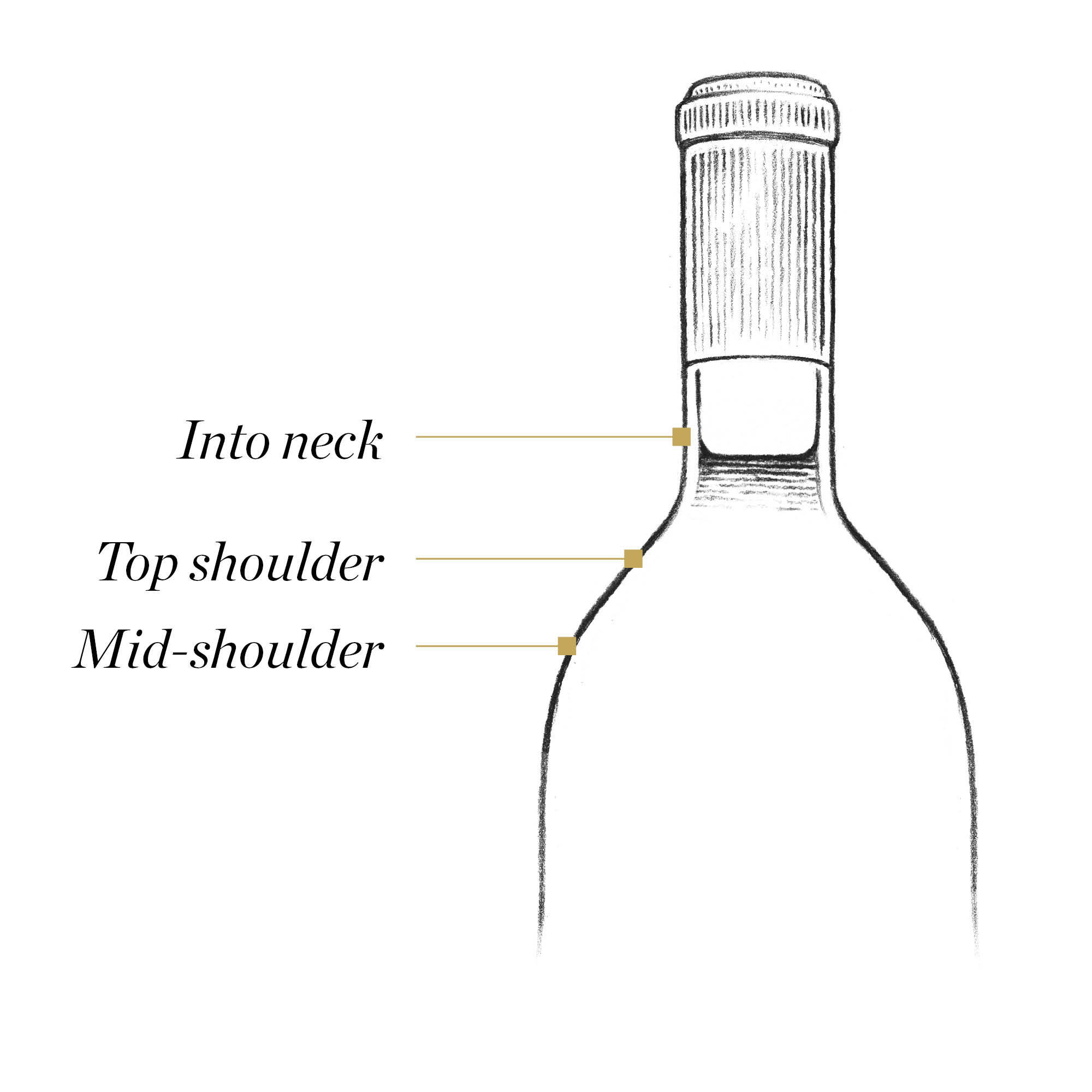
Bordeaux bottle
Terms used for Bordeaux bottles:
Into neck: any wine with this level is in excellent condition
Top shoulder: this is expected and normal for any wine of 25 years or older
Mid-shoulder: there might be some cork weakening but this is a very good fill for any wine of 50 years or older
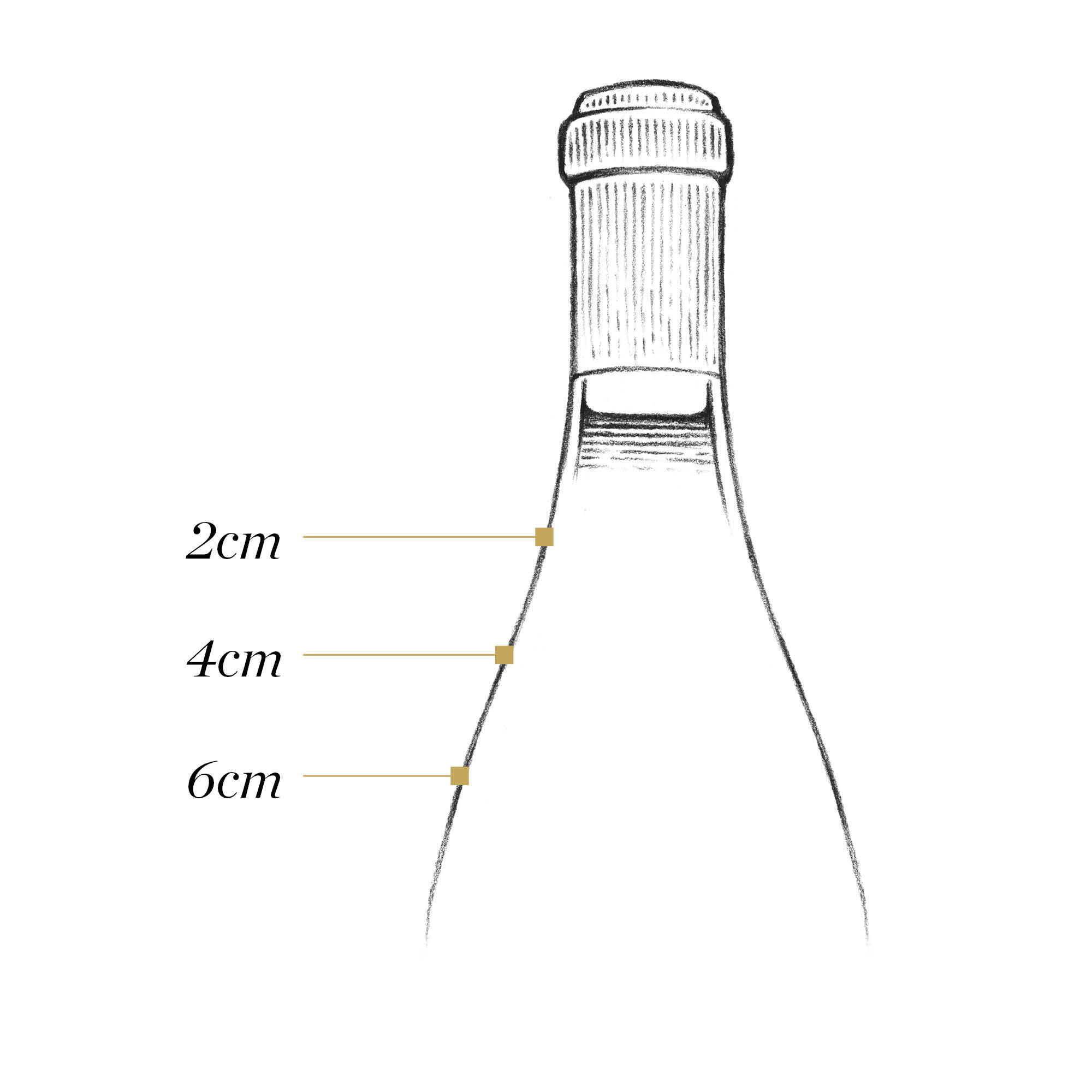
Burgundy bottle
The design of Burgundy bottles, with their sloping shoulders, presents a challenge in the traditional measurement of wine levels. Instead of the common classifications used for Bordeaux bottles listed above, Burgundy bottles’ fill lines are measured in centimetres between the capsule and the wine. Burgundy wines exhibit a remarkable resilience to ullage, so lower fill lines can here be a sign of good ageing. An ullage of 5-7cm in a Burgundy bottle over 50 years of age, for example, is considered acceptable.



