


Winemaking at extremes
Written by
Vitis vinifera, the grapevine. A Mediterranean plant, one that thrives with its leaves in the hot sun and a distant view of the ocean. Yet this plant is remarkably tenacious and is found in many unlikely regions, often subject to extreme conditions of one sort or another.
And while the word “craft” today often refers to working something by hand, the etymology of the word is far older, hinting at power and working with nature. Thus wine – the product of vines grown in harmony with nature, and created by careful handiwork in cellars – is truly the result of craft.
Of course any vineyard is subject to the whims of nature, from frost after budburst to rain just before harvest. Dodging such trials of nature are part and parcel of making good wine. But taking this to the extreme, looking at the power and the might, the force of nature that may craft a wine, and how producers can work with this, yields interesting results. The awesome power of a volcano, the slopes and sparks of its nature shaping the vineyards around it. The persistence of the sea, waves gently undulating and the cool, dark consistency of its depths. The force of weather patterns, cold fronts leading to frozen grapes, droughts sustained, and managed.
What does this mean for the wine? And why do producers seek out such limits?
Crafted by altitude
It is well known that vineyards on slopes, or mountains, can produce some of the finest grapes in the world. A combination of sparse soils, airflow and the cooling effects of altitude, not to mention direct sun, can create concentration in the grapes. But there is a difference between mountains and slopes. One is gentle, the other quite extreme.
Telmo Rodríguez is one of the great Spanish winemakers, renowned for his charm and charisma. And most of what Telmo has done could be described as “extreme”. He has revitalised old vineyards in the middle of nowhere with both local and logistical challenges along the way, says Buyer Catriona Felstead MW. The project that really stands out, though, is extreme winemaking in the hills of Málaga, making a beautiful sweet wine, Molino Real.
Málaga, as a style of sweet wine, has a long and storied history. Christie’s, in its very first wine auction in 1769, listed wines from Málaga alongside the very best from Germany and Burgundy. Similar in character to South Africa’s Vin de Constance (and drunk in similarly fashionable places in Europe just a couple of centuries ago), the style all but died out in the 1900s. Telmo has revived this, with much hard work.
He discovered some vineyards, over two decades ago, which he describes as “difficult, almost impossible […] which had miraculously survived”. These vineyards are in Cómpeta, nestled between the mountains of Granada and the Mediterranean Sea, between 350 and 1,000 metres above sea level. The slopes are impossibly steep but he refuses to terrace these vineyards, “to avoid denaturing the soil.” Instead, they are worked by hand, men harvesting in the ravines.
The grapes — Muscat of Alexandria, the same grape used for Vin de Constance — ripens exceptionally well here, with the hot slate soils resulting in high sugar levels. The grapes, once harvested, are then dried in the sun to increase their concentration. In the process the grapes shrivel, meaning to get a litre of grape juice, some two and a half kilos of grapes are needed. In 2018, just 4,103 half-litre bottles of this special wine were produced. Extreme rarely equals volume.
Nevertheless, for Telmo this is all worth it. Reviving a nearly extinct style of wine gives purpose to this project. And, the vineyards are also supported. “Molino Real has contributed to giving breath to a vineyard that was dying,” he says poetically. Here, extreme winemaking takes on a deeper dimension: it is about preserving techniques and styles of wine, despite the difficulty, for future generations.
Working in the mountains is difficult enough, but some mountains are more extreme than others.
“We're used to extreme natural events. It teaches us how to adapt, how disturbances can be an inspiration”
Mount Etna: Europe’s most active volcano. Rising 3,300 metres above sea level and with between 50 and 60 eruptions every year, this is certainly an inhospitable environment to humans. Yet in some ways the extremes here provide balance. The altitude helps mitigate the fierce Sicilian heat, and the denatured lava provides a mineral-rich soil. As a result, some of the vineyards on Etna produce stunning and truly unique wines.
Alberto Graci has tended vineyards here for many decades, and his Etna Bianco and Etna Rosso wines – made from local grapes Carricante and Nerello Mascalese – have a tension and vibrancy to them which is simply not found in wines from other parts of Sicily, such as the Nero d’Avola from further south.
Despite the difficulties of farming in such a climate, the extremes of this region are something that Alberto takes in his stride. “We’re used to extreme natural events,” says Alberto. For him, the mountain is a tutor. “It teaches us how to adapt, how disturbances can be an inspiration.”
As well as grappling with eruptions – any one of which may cause lava or pyroclastic bombs to damage the vineyards – Alberto also contends with steep slopes, many of which need terraces to help retain the soil. These need to be painstakingly built, and maintained, by hand – just one more job on the endless list of the vigneron.
Alongside this is the Sicilian heat. Although altitude moderates this to some extent (Graci’s vineyards lie between 600 and 1,000 metres altitude) the truth is that summers in Sicily are getting hotter, and drier too. Though the vine is a Mediterranean plant, and can survive – even thrive – in heat and low water conditions, there is a limit. For producers in Sicily, we may be approaching that limit. For now though, Alberto remains unfailingly positive – and year after year, his extreme mountain wines remain delicious.
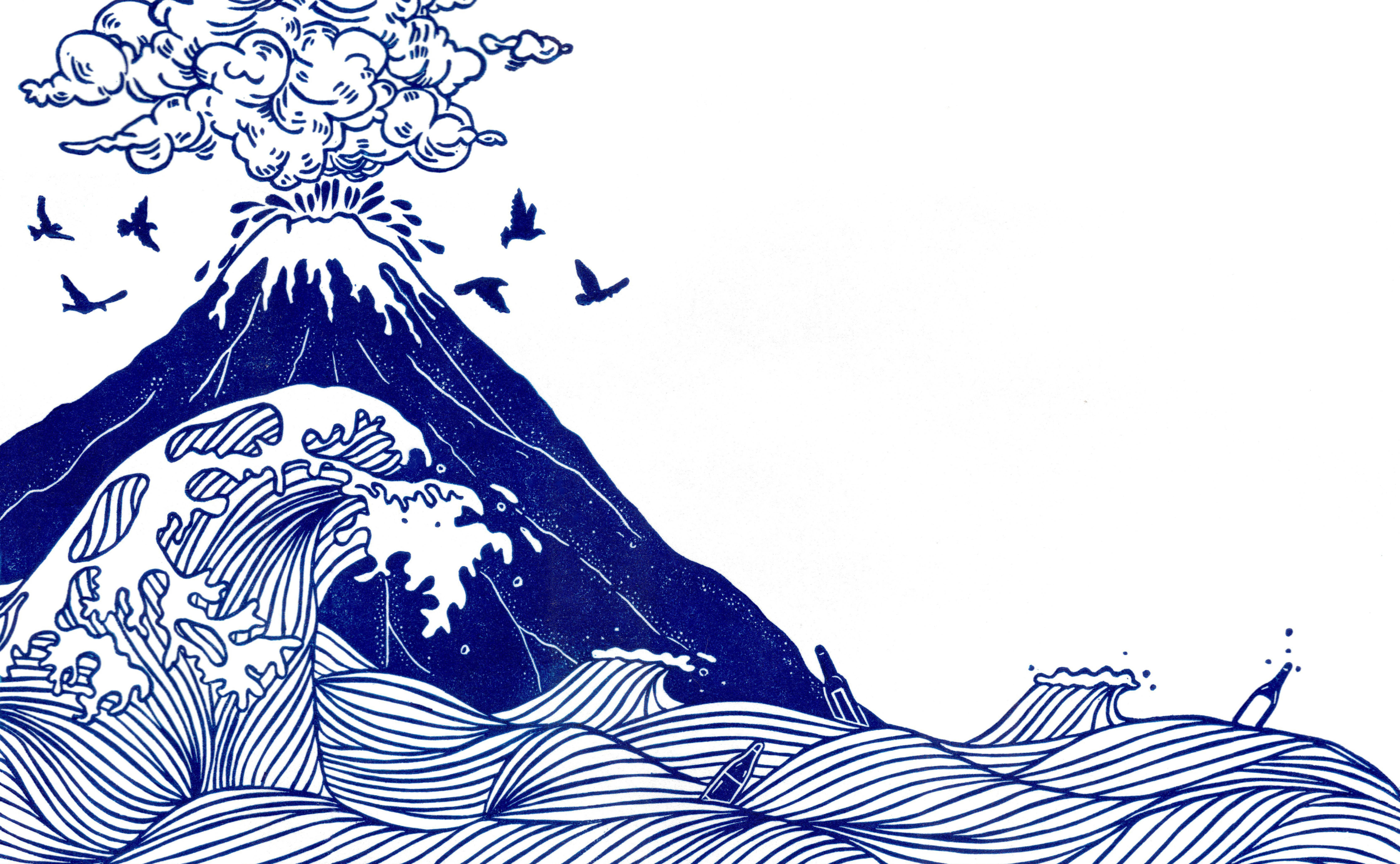
Winemaking at extremes by Rosie Lavis.
Crafted by ice
At the opposite end of the temperature spectrum lies Canada’s Niagara Peninsula. Here, a few miles away from the mighty Niagara Falls, a cluster of vineyards shelter between the lake and the escarpment. Winter temperatures can drop as low as -20°C. Beautiful wines are made here: aromatic whites and fresh, crunchy Cabernet Franc. But the crème de la crème is undoubtedly the icewine. Made each winter with berries frozen to at least -10°C, these are picked, and crushed when still frozen to release the sweet, concentrated juice within. Slowly fermented at cool temperatures, this makes the beautiful, balanced, and pure icewine for which Canada is known.
Here, the work is extreme in every sense of the word. The weather is cold, with deep snow in winter. The grapes are picked, often in the dead of night, to maintain their perfect freeze. One winemaker I spoke with told me that during a recent harvest, the crusher broke as the grapes were being pressed – unsurprisingly, squeezing juice from grapes that are frozen as hard as bullets is tough work. Despite toiling in the dark and cold, it could not be repaired before morning, at which point the grapes had started to slowly melt. That year’s harvest could only be bottled as “late-harvest”, not icewine, and thus had to be sold at a far lower price.
Such technical challenges pale in comparison to the natural ones though. Winemakers have long worked out ways to adapt to, or even capitalise on, nature’s whims; but nature, it seems, is becoming more whimsical. Where icewine could be made every year on the Niagara peninsula, now it is 50:50 whether there will be an icewine harvest or not. If the grapes do not freeze to the required temperature, the best that can be produced is a late-harvest wine. Cryo-extraction is another option – where ripe grapes are picked and then thrown into giant freezers, to concentrate the sugars. Opinions remain mixed on the effect of this on the finished wine.
Canada is not the only country where icewine is made. Germany and Austria have notable icewine (Eiswein) industries, and it is reliably produced in Ningxia in northern China too. Cornelius Dönnhoff, in Germany’s Nahe, produces Eiswein from some of their steep mountain vineyards. The most highly sought after, Oberhäuser Brücke, measures just 1.1 hectare in size. The protected site is perfect for gently freezing the grapes during the winter. But Dönnhoff, like producers in Canada, are finding this ever more difficult. Warmer winters and huge variations have made this ever more difficult to produce. Intense cold snaps come too early or late in the season, impossible to predict. Eiswein, rather than being a consistent product made in tandem with nature’s extremes, has become a quirk, an unpredictable boon – but one that may bankrupt you in trying to produce it.
To make Eiswein, you are inevitably not taking other paths. You must leave the grapes on the vine for months longer than they would normally be picked. Helmut Dönhoff, Cornelius’s father and winemaker at the domaine until 2007, recalls picking on Christmas Eve, in the middle of the night, getting all the family out into the vineyards to harvest the grapes at the perfect level of freeze. But if that freeze doesn’t come, the grapes have sat on the vines for nothing – open to attack by birds, boar or even theft. It is a big risk.
This increasing variability in weather is in itself extreme. Eva Fricke – not an Eiswein producer but making an incredible array of Rieslings in the Rheingau – notes that in her experience, producers in traditional regions that historically have had relatively predictable conditions are having to cope with increasing extremes, be they rain, hail, frost, wind or heat. For Eva, climate change is defined by the fact that whatever weather occurs outside the norm, it now tends to be extreme. There is no such thing as a middle ground any more.
Crafted by the sea
It’s not just vines themselves that suffer through inhospitable environments and cold, dark times. Bottles too can be subjected to extreme pressures — in some cases, very literally.
As recently as July, a 19th century shipwreck in the Baltic was found with around 100 bottles of Champagne on board. After 170 years below the surface, they remain there for now, not yet opened or tasted. However, many bottles salvaged from ancient shipwrecks have been opened, tasted and very much enjoyed. So much so, that underwater ageing is now a recognised (albeit still niche) method of maturing wines.
Champagne Leclerc Briant is perhaps one of the most well-known producers undertaking this method. Starting with the 2012 vintage, winemaker Hervé Jestin decided, upon bottling one of his Champagnes, to sink it 60 metres under the sea off the coast of Brittany for around a year to further mature. While this may initially seem curious, they deem it an ideal environment for the maturation of Champagne, devoid as it is of oxygen and light.
Like everything else in the meticulous production process for this Champagne, the winemaker here uses the tools available to help create the perfect wine. Just as a vintner might choose the perfect site in the vineyard and allow nature to work its magic, the same approach is applied to ageing a wine under the waves – utilising extreme forces to craft something sublime.
The question always asked of this special, sub-marine aged Abyss cuvée is: “does it taste any good?” The answer is a resounding yes. The wine has a distinctive mineral note, a hint of salinity and preserved lemon on the palate and a focused, linear structure that sets Abyss apart from other wines in Leclerc Briant’s range.
Something that Telmo says about his sweet wine strikes a chord here: “It has been a great effort to make a few bottles of a wine far removed from fashion. However, we consider it a privilege to have been able to penetrate the mystery of these mountains and their history. These wines have made us more humble and wise.”
In the process of crafting, working with nature, exploring the extremes, the heights and the depths, producers unearth a little more mystery. They bring it to the surface, turn it into something we can experience, taste and enjoy. And in the process, they perhaps give us pause to reflect. To make us humble in the face of such extremes.



