

A journey along the Loire River
Written by
While most of my time may be spent in the cellars and vineyards of Burgundy, the Loire Valley is my first love. My first contact with its wines actually pre-dates my career in the wine trade by around a decade. Many of the villages and towns where I grew up in rural Lincolnshire are twinned with places in the Sarthe department, around Le Mans, the city famous for its 24-hour races. A French exchange trip to a nearby school provided us with the opportunity for a day trip to Saumur.
Importantly, this excursion involved a tasting with a local wine producer and the chance for a group of giddy teenagers to purchase some Crémant de Loire to take back to our parents. I have no recollection of the quality of the wine, though the mere excitement of drinking wine on a school trip was sufficient to leave a lasting impression.
Fast forward a dozen or so years and I found myself appointed Loire Buying Assistant for a small but highly respected wine shipper. My knowledge of Loire wines had grown a little since my cross-channel jaunt, mostly through my first job out of university with a wine merchant.
Dealing with all the various wines impressed upon me the sheer scale and variety of wines that one could find in the Loire Valley. There were numerous different styles of wine. I already knew about sparkling styles from my school trip, but of the still wines, some were teeth-achingly dry while others were lusciously sweet. The most difficult ones fell somewhere in between. And while Burgundy is made almost entirely from Chardonnay or Pinot Noir, I soon discovered that Loire wines come from a fascinating and often confusing mix of grape varieties.
A baptism in the Loire
Just a couple of short months after starting my buying role, I was to head off to the Loire on a memorable trip. In the freezing cold of the first week of January, I had my Loire baptism.
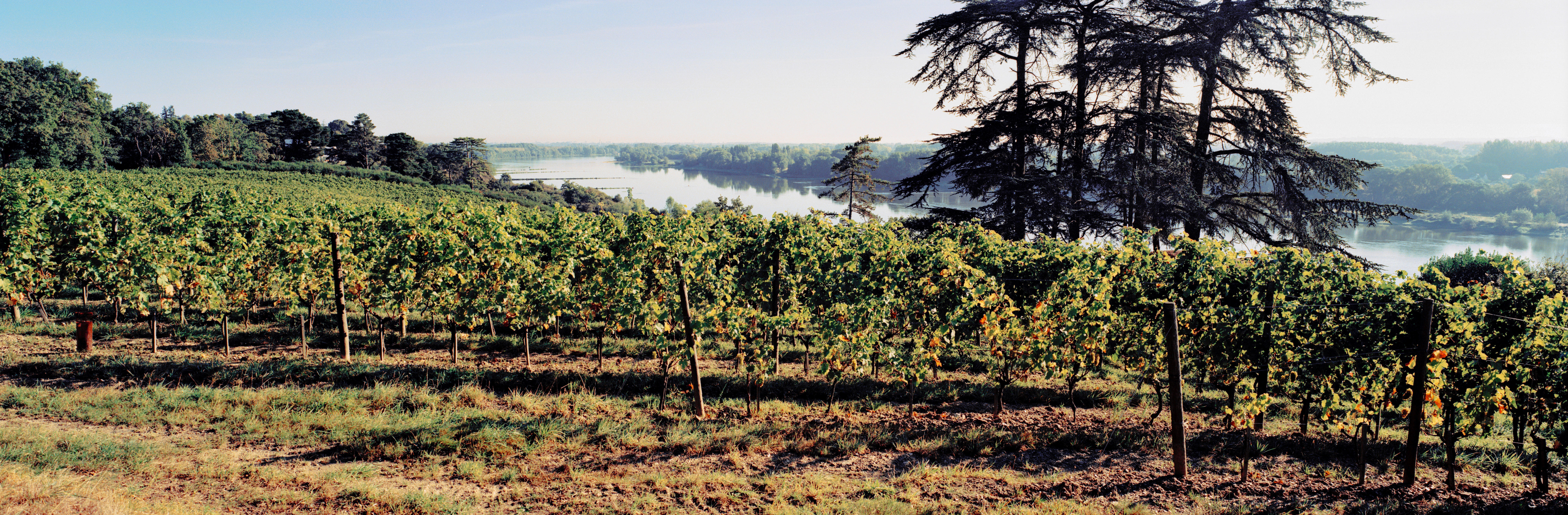
I quickly learned that the Loire Valley in the winter is a thoroughly miserable place. Cold, damp and dark, it felt like we didn’t see sunlight for the entire week. What struck me on that first trip was the sheer size of the winemaking region. It would take around five hours to drive the 400 kilometres from Pouilly-sur-Loire in the east to Nantes in the west. We would often drive for two to three hours between visits. Subsequent visits in the warmer months unveiled the famed beauty of the region, the outwardly serene but powerful Loire River drifting past picturesque turreted châteaux, and the occasional nuclear power station.
But even in that harsh winter, the people were among the most welcoming and generous I have ever come across. Even a request for a meeting at 8.30 in the morning was met with an invitation to stay for lunch. (I later established a rota system so that we had lunch with a different grower each year to ensure no-one was left out or offended by us declining their invite.)
Part of my Loire baptism was learning that these wines, particularly when young, can possess a fierce acidity. Nothing wakes you up or removes the enamel from your teeth like tasting young Muscadet and Sauvignon Blanc from steel tanks in a frigid cellar. This has been mitigated somewhat in recent years by warmer vintages, but Loire wines always retain this freshness.
Despite the challenges of long days tasting unfinished wines for the first time, all the while trying to revive my rusty French and get acclimatised to French cuisine, this week was a memorable and rewarding experience that has stayed with me. It was difficult not to fall in love with the region, its wines and the people who make them. I have always enjoyed fresh, energetic wines with modest alcohol and vibrant acidity, and the Loire specialises in just that.
The pursuit of quality
I soon learnt that, while there was a strong market for Loire wines over a decade ago, much of the demand was for affordable, early-drinking wines destined for the Paris brasserie market or supermarket shelves. Vast oceans of “industrial” Sancerre, Pouilly-Fumé and Sauvignon de Touraine are still pumped out for the US market, in particular. The fruit is cropped at eye-wateringly high yields, picked early and forced through fermentation with the addition of selected yeasts and enzymes so that the wines can be bottled just a few months after harvest and shipped across the Atlantic.
Only a small minority of the producers at the time were making truly complex, age-worthy wines that spoke clearly of their terroir. Fortunately, I was working exclusively with this small bastion of quality, including François Cotat, Daniel Chotard, Claude Riffault, Vincent Carême, Domaine Huet, Frédéric Mabileau, Denis Jamain and Lamé Delisle Boucard.
Over the next decade, I continued to make an annual pilgrimage to the Loire to taste the new vintage with the region’s growers. While a hard core were flying the flag for quality, and a strong movement towards organic farming was well underway, the undoubted potential of the region remained mostly untapped. On my most recent visit in July 2023, the first for a few years due to Covid thwarting my plans, it became immediately clear that the region as a whole had taken a huge leap forward.
While the established names continued to produce excellent wines, generational changes had also led to a more quality-focused approach. Youngsters, having studied in Burgundy and the New World, had taken over from their parents, making the bold decision to abandon their established markets in favour of driving quality upwards.
Alongside this, there has been a recent influx of ambitious outsiders, including Anatole de la Brosse in Saumur, Luc Briand and Bénédicte Petit in Anjou and the deeply impressive Ivan Massonat, whose Domaine Belargus is making waves with its powerful and concentrated expressions of Chenin Blanc. Tempted by the relative affordability and availability of top-quality land, they have brought a fresh perspective to the region. Established names are often constrained by their preconceptions and loyal customers who are used to paying low prices for sound but uninspiring wines.
A variety of riches
I will always have a soft spot for Muscadet, and rate it as arguably the best-value wine one can buy in France. It is made from the Melon de Bourgogne grape, which is planted at the western end of the Loire Valley around Nantes. This lemony, salty white is often dismissed as simply a thirst-quenching accompaniment to fresh seafood, and much of it is drunk within a year of bottling. What many people do not realise is that it ages tremendously well. Tasted blind, the best wines can pass for a very good Chablis. And while there are also excellent examples of Malbec (known locally as Côt), Gamay, Pineau d’Aunis and other, more obscure grape varieties, it feels clear that the highest-quality wines in the Loire are made from the trio of Chenin Blanc, Cabernet Franc or Sauvignon Blanc.
Sauvignon’s kingdom is the Centre-Loire, home to the famous names of Sancerre and Pouilly-Fumé. With such a strong reputation, selling wine here is easy, so it takes real determination and bravery to try something different. Yet all of my favourite producers here do just that. François Cotat’s wines are some of my favourites, but they are frequently deemed by the authorities to not be representative of their appellation. As a consequence, they regularly fail the blind tastings required to use the appellation on the label. Following in his well-trodden footsteps is Alexandre Bain, just over the river in Pouilly, though he bottles everything as Vin de France to avoid such battles with bureaucracy.
For Chenin Blanc, I often gravitate to the Vouvray appellation; the wines here have a wonderful, powdery texture reminiscent of the tuffeau soils on which the grapes are grown. The wet wool, green apple and honey flavours are unmistakable, and as old vintages of Domaine Huet attest, they age at a glacial pace. Saumur wines have a tauter, leaner profile, often allied to some tropical fruit notes. The appellation is perhaps more dynamic, as evidenced by the youthful Théo Blet, our latest discovery.
Savennières and Anjou, on the opposite bank of the Loire, are now a melting pot of established names and new disruptors. Often made from steeply sloping vineyards with a patchwork of different soil types, these are typically more powerful, textural expressions of Chenin, wines with grip and tannin that demand food and contemplation.
Cabernet Franc, flavour of the month in Bordeaux thanks to its ability to bring freshness and finesse in the global warming era, is the undisputed red grape of choice in the Loire. Historically these could be a little green, mean and lean, but warmer summers and better farming and winemaking techniques are helping to give wines that can challenge both Bordeaux and Burgundy.
Chinon, Bourgueil, Saumur-Champigny and, increasingly, the larger Saumur appellation produce the most serious and long-lived wines. St-Nicolas-de-Bourgueil with its flat, sandy soils is a good spot for crunchy, early-drinking wines in the brasserie style. A number of long and memorable tastings of wines from throughout the 20th century with Philippe Boucard of Lamé Delisle Boucard impressed upon me the ability for these wines to age for several decades.
It has now been almost 15 years since I first visited the Loire Valley for a buying trip, and the transformation that has taken place in that time has been indescribable. What was previously a sleepy, traditional and somewhat complacent winemaking region is now vibrant and dynamic, crackling with energy as vignerons push the boundaries of what is possible.
Helped by a more favourable climate that allows them to work with riper, healthier fruit, I see the Loire as similar to Burgundy 20 or so years ago. Indeed, the best producers are following a similar single-vineyard approach, aiming to highlight the nuances of each individual site. Armed with modern-day techniques and equipment, I am certain that these wines are the future of fine wine collecting.
Four favourites along the river
Saumur
Perhaps the most quietly impressive of our Loire growers is Arnaud Lambert. His father Yves created the domaine in 1996, and Arnaud joined in 2005, converting to organic viticulture in 2009 and subsequently expanding the vineyard holdings to a substantial 50 hectares across the Saumur and Saumur-Champigny appellations. Since 2018 he has followed biodynamics, focusing more and more on sustainable and regenerative viticulture to improve the biodiversity on his land. His white wines have been recognised as among the best in the Loire for some time, and his reds are quickly catching up as Arnaud refines his winemaking to produce more elegant, precise and sophisticated expressions of Cabernet Franc. Another devotee of a parcel-based approach, he makes a wide range of single-vineyard wines, each of which expresses its origin and unique identity.
Vouvray
One of my favourite producers, and some of my dearest friends, are Vincent and Tania Carême. A leading light of the Vouvray appellation, Vincent is also highly respected by his peers, teaching at the local viticultural college in Amboise. He also mentors young growers, helping them to set up on their own and encouraging them to follow his organic approach to viticulture. His 2008 Vouvray, Le Peu Morier, is truly one of the most memorable wines I have drunk, and his Plaisir Ancestral is one of the finest sparkling wines outside of Champagne. Not content with making some of the best wines in the Loire, he now also produces some excellent cuvées in South Africa’s Swartland and counts Eben Sadie, Chris Mullineux and Adi Badenhorst among his friends.
Bourgueil
Pierre Gauthier of Domaine du Bel Air is a recent discovery for us; we had been buying his wines for a few years but due to Covid, I had not met the man himself until last summer. He is, to put it simply, an icon of the Loire. Humble and self-effacing but immensely talented, he is held in the highest regard by his peers, and he produces arguably the finest Bourgueil around. We were fortunate enough to have a picnic with him near his hidden barrel cellar amongst the vines, sharing various different vintages and cuvées over a simple yet delicious selection of cold meats, cheeses, salad and seafood. With winemaking, he is a master of both the brilliantly simple and the simply brilliant. His Jour de Soif is a wine that the term glouglou could have been invented for, while his rare and magical Clos Nouveau can lay claim to being the greatest red wine in the Loire. Interestingly, he purchased this vineyard through the archaic process of vente à la bougie – an auction where the hammer falls when the candle burns out.
Sancerre
I have a huge fondness for Simon Chotard, perhaps because I visited his father Daniel in Sancerre on my first trip and have since seen Simon arrive at the domaine and grow, taking ownership and making his own mark on the family estate. Daniel, a talented musician, was something of a reluctant winemaker, having previously been a schoolteacher until the call came to return to the cellar. His wines were excellent but as was the fashion at the time, everything was made in stainless steel and he made one big, blended cuvée and an old-vine bottling (the excellent Marcel Henri). Simon has torn up the rulebook, experimenting with oak and acacia casks and barrels, along with amphorae of different materials. The range now includes a number of single-vineyard bottling from his organic-certified vineyards, and quality is approaching that of the superstars of the appellation. Definitely one to watch.



